 TEROSON, the expert in high performance bonding, sealing, coating and reinforcing for the automotive sector, has extended its solutions to help body restorers achieve a durable, high-quality finish after welding.
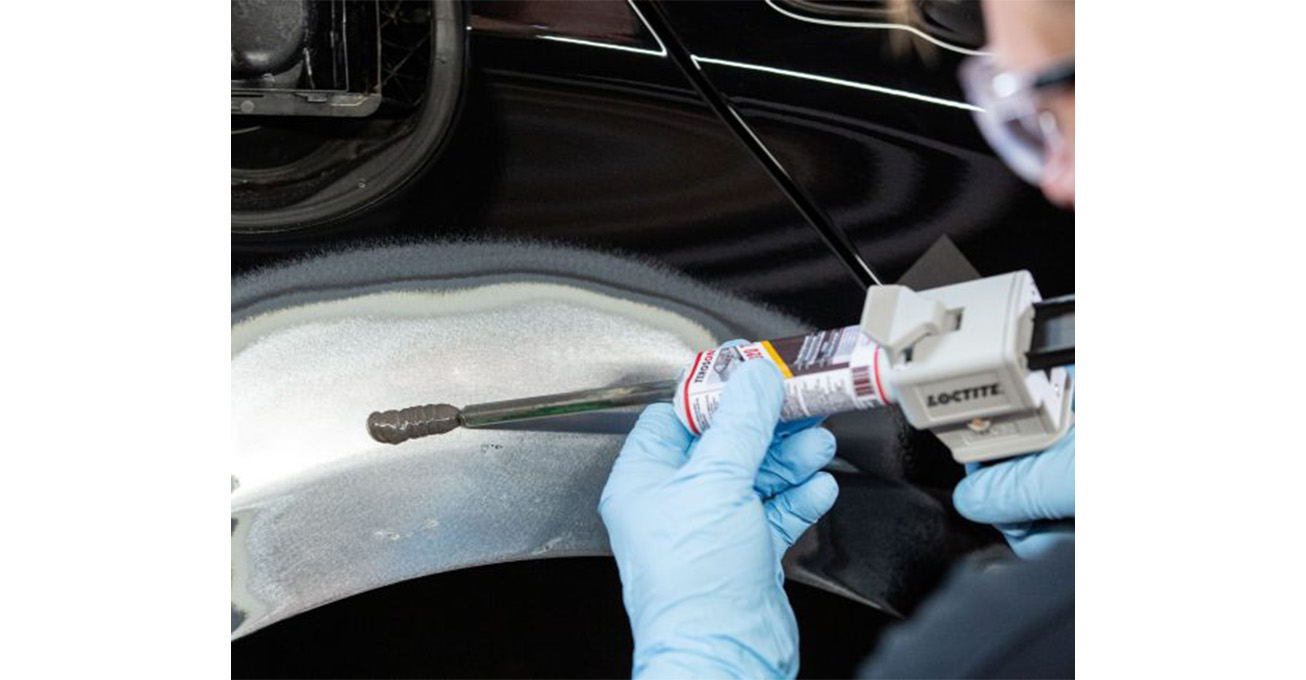
TEROSON EP 5020 TR is a two-component epoxy-based cold rebuilding material designed to replace conventional tin solder in aftermarket repairs of automotive body damagesit offers fast curing and is easier to sand and smoother to apply than other solutions in the market. An improved formulation means it can be applied without pre-warming.
A durable, high-quality finish has long been a challenge in automotive body repair and restoration. Traditional tin loading has been valued for its strength and finish quality, but it is time-consuming, highly skilled work, which involves materials that are less practical for modern workshops.
At the same time, common filler materials are not always ideal for welded seams and precision finishing. In some applications, shrinkage over time can affect the appearance of the repair and reveal surface imperfections that were not visible immediately after the job was completed.
The TEROSON light metal filler products offer the most modern solution to that challenge. TEROSON EP 5010 TR and 5020 TR are intended to be used as a tin-solder replacement in automotive body repair, particularly where welded areas need to be sealed, rebuilt and finished to a high standard.
Rather than replacing welding, the product is used after welding as part of the finishing process. It is designed to smooth and refine repaired areas, including welded seams, and to provide a stable surface that can be shaped and ground back to match the surrounding panel.
The choice of which product to use comes down to the nature of the rebuilding work. While TEROSON EP 5020 TR is ideal for smaller jobs due to its speed of curing, the slower TEROSON EP 5010 TR gives more time to body repairers to perfect the remodelling before curing.
TEROSON EP 5020 TR is now available in 200 ml and 50 ml two-component cartridges for efficient application with standard cartridge dispensers.
“When panels are joined or repaired, technicians often need to deal with minor porosity, surface irregularities and visible seam lines. These areas demand a material that can deliver a smooth finish without compromising long-term appearance,” explained [spokesperson] of TEROSON.
Polyester fillers remain widely used across the sector, but they are not always the best option for this type of work. Over time, some fillers can shrink, which may lead to sinkage or reveal the repair beneath the surface.
“Traditional tin soldering requires an open flame, which destroys the corrosion protection on the back of the repaired part. With TEROSON EP 5020 TR, however, there is no need to disassemble the interior of vehicles such as ambulances or minivans.”
How TEROSON EP 5020 TR helps
TEROSON EP 5020 TR and TEROSON EP 5010 TR are formulated for automotive body repair and are suitable for use on both steel and aluminium. Their solvent-free epoxy rebuilding compound offers a stable and durable way to finish repairs where precision matters.
Once cured, they can be shaped and ground effectively, helping technicians achieve a smooth surface across repaired areas. Their no-shrinkage properties are particularly important in visible seams and joins, where maintaining the finished profile over time is essential.
The rebuild process with TEROSON EP 5020 TR and TEROSON EP 5010 TR, prevent exposing workers to the most dangerous health risk associated with tinning in a car workshop: the inhalation of toxic lead dust and fumes, as traditional repairs often involve the use of lead-based bodywork solder
Both TEROSON products are well suited to applications such as welded rear quarter repairs and other areas where bodyshops need a reliable tin-solder replacement that supports a high-quality finish.
As repair methods continue to evolve, materials are becoming more specialised and more closely aligned to specific tasks. TEROSON EP 5020 TR and TEROSON EP 5010 TR reflect that shift by offering a practical alternative to traditional tin loading in applications where stability, finish quality and long-term appearance are critical.