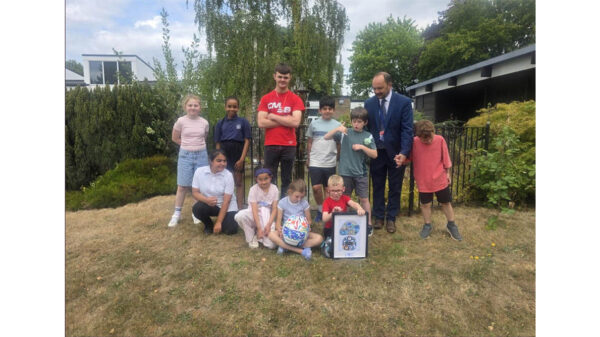
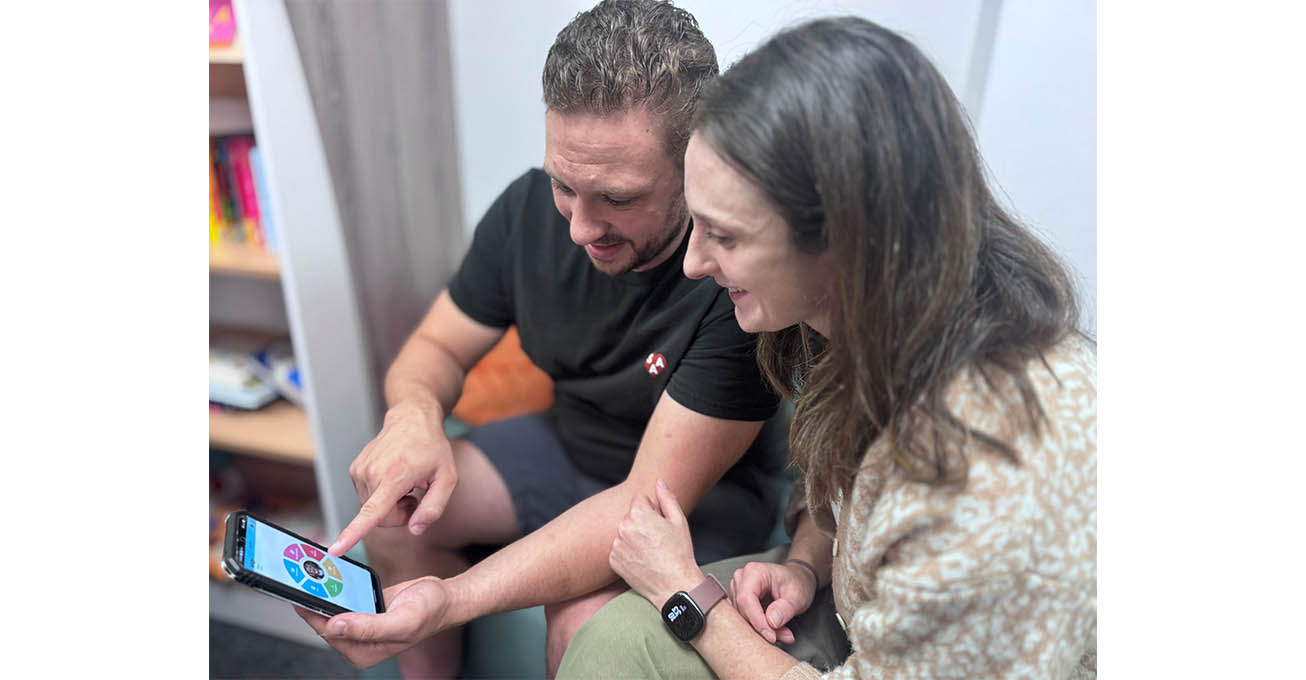
The Head of Derbyshire’s largest special needs school is urging other head teachers to adopt an innovative assessment and recording app developed there after years of research.
Trish Turner, Executive Head Teacher at Brackenfield SEND School, said the ‘BOOP’ app – backed by £50,000 Innovate UK funding – is an essential tool for all head teachers to meet the Government’s inclusion requirements.
Brackenfield, in Long Eaton, caters for 310 children aged 3-19 with complex learning, communication and physical needs.
Its leaders have spent years working with software developer Debbie Craig on the innovative BOOP app, using extensive pupil information to develop a tool families have hailed a “lifeline”.
Trish said: “As a special needs school we aren’t working with one curriculum but hundreds. Our children are all so different in terms of their needs and abilities. The Government has made it clear all schools across the country must be inclusive.
“Our goal is always meeting children’s needs. We know and have seen BOOP’s impact. Schools need this. Families and children need this. It’s changed our working lives and the lives of children and families.
“We are preparing these children for adulthood through every available opportunity. By harnessing technology we know we meet their needs in line with what the Government asks of us and more importantly with what the young people in our school need, as stated in their Educational Health Care Plans.”
Innovate UK awarded Belfast-based mum-of-four Debbie £50,000 to create the intuitive app after she grew frustrated trying to communicate with professionals on the progress of her autistic son.
Debbie teamed up with Brackenfield to develop the app that provides open communication between families and teachers, allowing them to document children’s progress in real time at home and in the classroom.
The school has reported huge benefits including improved progress, excellent attendance and a dramatically reduced teacher administrative workload.
BOOP integrates systems to provide schools with a comprehensive platform bringing together assessment, planning, evidence collection and reporting.
Developed over the past five years, it assesses need, provides evidence of learning, reports on progress and behaviour alongside monitoring and recording healthcare needs.
By integrating and analysing pupil data from multiple assessment sources, the aim is to combine systems to provide schools with a rich, forensic analysis of pupil needs and progress.
Cognitive functioning, communication needs, independence levels, sensory processing, social, emotional and mental health needs, along with physical and medical factors, are all considered to develop a comprehensive profile of each child, group, or whole-school cohort.
Trish said: “BOOP allows staff to holistically assess pupil need. We can create ambitious, meaningful targets and record progress through evidence-based approaches. Parents see the results both live and through really good reporting.
“At Brackenfield, we believe progress is about more than data alone. It’s about understanding each child as an individual, recognising and responding to their unique needs, and creating the conditions in which they can flourish. BOOP provides the evidence, insight and accountability that supports this vision and helps us ensure every pupil receives the education they deserve.”
Head of school Sophie Evitts added: “With BOOP we have completely re-written the rulebook. We are not dealing with bits of paper and note making any more. It has given parents a voice. They connect with us much more easily.
“It has changed our life at this school. It has become part of our community. Parents tell us it is a lifeline and really brings the community together.”
App creator Debbie said: “When my son was small we had to negotiate the world of autism. I thought it would be very straightforward, we would have a clear path, and there would be resources available to us.
“In reality, I felt like we had to fight for everything. There was a lot of information we didn’t know. When he was in primary school, we didn’t have home school diaries. There were about 10 different apps. Nothing really worked that well. It was quite frustrating. It made you feel you were having to fight all the time for the things we knew we needed but we couldn’t get them.
“Working with Brackenfield has been a huge factor in how BOOP is designed. They are very honest, forward thinking and passionate.”
BOOP is now used in growing numbers of all types of school in the UK and overseas including the mainstream Blue Bell Hill Primary in Nottingham.
Lucy Hunter-James, Special Educational Needs Co-Ordinator (SENCO) at Blue Bell Hill, said: “The platform is intuitive, responsive, and flexible enough to be tailored to our assessment needs. The tagging system is particularly effective in capturing and evidencing small steps of progress, while also linking well to our curriculum design. We are beginning to explore the target-setting features, which appear to have significant potential.
“From a SENCO perspective, I really like the platform’s ability to present assessment information in a clear and accessible way.”
For some parents, the app is providing unprecedented insights into the life of children who are non-verbal.
Brackenfield parents Emma and Ben Taylor said using BOOP provided a “fantastic insight” into the experiences of their children, both non-verbal, as well as critical elements like medication.
The couple said: “BOOP provides a fantastic insight into what our children experience at school each day and on multiple occasions has served as a comfort and reassurance especially if they have gone into school distressed.
“As well as the text and pictures of daily activities, the logs for eating and toileting help keep us up-to-date and allows us to make informed decisions about medication titrations as soon as the kids are home.
“We love that the BOOP platform fosters a fantastic two-way, dynamic communication between school and parents.
“With both of our children being non-verbal, we are unable to ask them “How was school? What did you do today? Were you happy?” It allows us insight into their daily routines, special achievements and their work towards their personalised learning intentions. It also enables us to mirror activities at home that the children have found beneficial at school and vice versa.”