
Being environmentally conscious (or being eco-friendly, as it is also known) is the practice of considering your personal impact on the environment and on the ecosystem as a whole. It involves taking steps to reduce the current damage your actions are doing to the environment as well as making an effort to ensure that, in the future, you will make decisions will minimal environmental effects. It also tends to involve encouraging and educating others to follow the same principles, teaching them how to protect and help the environment through their actions too.
On a business level, that means looking at company-wide efforts to reduce the damage that you may be doing on the environment. This includes looking at more eco-friendly production methods that reduce the size of your carbon footprint (the amount of carbon your actions release into the atmosphere), educating your employees about what it means to be eco-friendly and ensuring that around the office, people are able to create their work and consume resources (e.g their lunch and office supplies) with an environmentally friendly focus.
What Are the Benefits of Being Eco-Friendly?
“Eco-friendly” and “environmentally-conscious” are more than just buzzwords, though. For businesses who embrace the idea of going green, there are tangible benefits for both those employed at a company, their bosses and the business’ bottom-line.
This is most apparent when it comes to marketing. Being able to promote yourself as an eco-friendly company is a massively helpful tool to have in your marketing toolbox because many people are actively looking for companies that have that same ethos. According to The Guardian, 1 in 10 UK adults (nearly 4.5 million people) are either members or support Britain’s environmental conservation groups.
These groups also had a combined income of £984 million, but this isn’t the only evidence that shows that eco-warriors are willing to put their money where their mouths are. Nielsen’s Global Corporate Sustainability Report 2015 revealed that the sales of consumer goods from businesses with a real commitment to sustainability grew more than 4% globally compared to the less than 1% growth of businesses that don’t have that same vision. Moreover, 66% of global consumers surveyed said that they would be willing to pay more for sustainable brands (a significant increase from the 55% who agreed with that statement in the 2014 report). 73% of millennials (those who reached adulthood in the 21st century) agreed with that statement, a considerable increase from the 50% who said the same in 2014.
Tangible improvements to your bottom line – or the potential to make more money – are great benefits but these aren’t the only advantages for considering an eco-friendly outlook. A report led by UCLA (the University of California, Los Angeles) revealed that companies that take going green seriously and have green standards and practices have employees that are 16% more productive than the average workforce. The researchers behind the study also note that as new graduates begin to enter the workforce, they are looking for companies that can make a difference – not just make them money. This means that going green is a smart way to attract committed and passionate applicants, not just a smart way to protect the planet.
How Can Midlands Businesses Go Green?
Some sustainability options are out of the picture just because of the location of the West Midlands. For example, it has been widely-reported that Birmingham has a lack of green space. So, it’s not going to be feasible for every business in England’s second city to have their own farm where they grow their own lunch (condiments and all) instead of buying packaged food from the supermarket. But, that doesn’t mean that it’s impossible to go green or that there aren’t simple steps that Midlands businesses can take to be more eco-friendly.
The first is to just change energy suppliers or change the way that your business gets its energy. Business Energy notes that there are several renewable energy sources including solar, hydro, geothermal, and wind that generate power using the Earth’s natural resources. As most suppliers offer renewable energy tariffs, you could potentially save money by considering a green form of energy too.
Another easy-to-adopt method of going green is to go paperless. GoodNotes explains that going paperless is essentially a case of just finding digital replacements, so that means using a note-taking app instead of a physical notebook, task managers like Trello instead of sticky notes, and using file-sharing and storage software like DropBox instead of a filing cabinet. While there may be cases in which you really do need to use paper or when certain existing documents don’t need to be filed with the new software-based process, you could still make an effort to recycle these pieces of paper where possible.
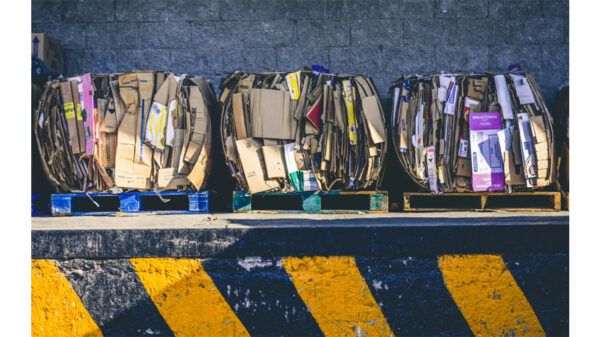
Speaking of recycling, try and get your entire business to follow the three Rs: reduce, reuse, recycle. You can limit the damage you do to the environment by making an effort to reduce the waste that you produce (especially if it’s non-recyclable waste), embracing reusable products (e.g reusable coffee cups instead of disposables) and recycling what you can so that it can be turned into something else!
Are Midlands Business Already Embracing Sustainability?
Businesses in the West Midlands and the rest of the UK are steadily rolling out green initiatives. The 2018 edition of Collaborate UK, which surveys SME (small to medium enterprises) reveal that 90% of SMEs think that it’s important to have more eco-friendly and sustainable business practices. A third of those also confirm that they plan to roll out initiatives like this over the next 12 months.
UK businesses have also introduced forward-thinking green programmes including offering employee bonuses for those who do their bit to cut the company’s carbon footprint. While this exact initiative may not work for everyone, it is just one of the methods that Midlands businesses can employ to go green. However, if they work to become more sustainable, both the companies and the planet will be better off for it.