
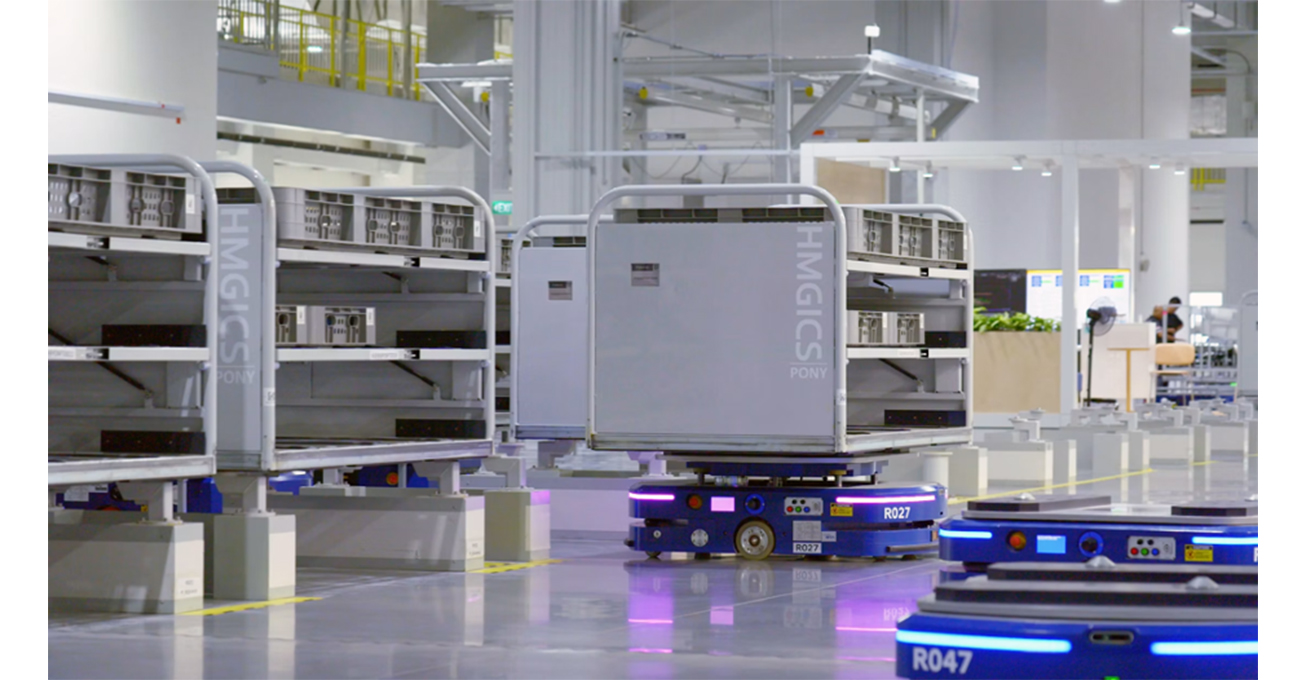
Your customer’s experience doesn’t end when they click “Buy.” In e-commerce, what happens between the warehouse and the front door can determine whether a customer comes back or takes their business elsewhere.
Today’s shoppers expect fast, reliable, and transparent delivery as standard. Businesses that fail to meet those expectations risk losing sales, loyalty, and trust. Smart logistics changes the way you think about delivery, turning it from a necessary cost into a strategic advantage.
Smart logistics combines data, technology, and efficient processes to optimise every stage of the fulfilment journey, from the warehouse shelf to the customer’s front door. The result is a smoother operation, happier customers, and greater potential for sustainable growth.
Beyond Basic Shipping
For many small businesses, logistics starts and ends with packing a box and picking a courier. This traditional way of doing things is often reactive, manual, and disconnected from other business operations. Smart logistics, though, means a fundamental change in how you think. It treats the entire fulfilment process as one connected system that you can monitor, manage, and improve using technology.
This goes way beyond just shipping. It begins with intelligent inventory management, making sure stock levels update automatically across all sales channels to stop you from overselling. It continues with automated order processing, where orders are picked, packed, and checked with very little human error. Finally, it leads to a delivery process that isn’t just about sending an item, but about giving the customer a clear and positive experience. The goal is to build a responsive system that uses data to make better decisions at every stage. This move towards supply chain network optimization isn’t just for big companies anymore; it’s becoming a crucial advantage for any ambitious online business looking to grow efficiently and compete effectively.
Optimising Carrier Networks
One of the most powerful uses of smart logistics is managing your relationships with couriers. Most businesses use a few carriers, but manually picking the best one for each parcel is inefficient and prone to mistakes. A delivery to central London has different cost and speed needs than one going to the Scottish Highlands. Smart logistics automates this decision-making through carrier optimisation.
Using a set of pre-defined rules based on destination, parcel weight, size, and desired delivery speed, an intelligent system can automatically choose the most suitable and cost-effective carrier for every single order. This means you won’t overpay for a premium service when a standard one will do, or vice versa. Some specialist providers, like J&J Fulfilment, build this technology directly into their services, automatically sending parcels to the best-fit carrier without any manual input from the client. This approach to holistic logistics network optimization not only saves money but also improves the customer experience by offering more delivery options, such as next-day, weekend, or economy services, all handled smoothly in the background.
Real-time Visibility and Control
A lack of information causes a lot of cost and frustration in traditional logistics. When a business owner doesn’t know exactly what stock they have, where a customer’s order is, or why a shipment is delayed, they can’t act quickly. Smart logistics solves this by giving you complete, real-time visibility across your entire supply chain, much like the considerations for an urban logistics scheme in South East London.
From a central dashboard, managers can see live inventory levels, track the status of every order from picking to dispatch, and monitor each parcel’s journey. This transparency changes everything. Instead of reacting to a customer complaint about a late delivery, a support team can spot the delay in the system, figure out why, and tell the customer proactively. This turns a potentially bad experience into a positive one. This level of insight comes from technologies like barcode scanning at every stage and the constant flow of data from integrated systems. As technology improves, the optimization of 5G networks promises to make this data transfer even faster and more reliable, allowing for even more precise control over logistics operations. For the customer, this means accurate tracking updates and confidence that their order is being handled professionally.
Reducing Costs
While making customers happy is a main goal, smart logistics also leads to significant and measurable cost reductions. These savings come from many areas of your operation, adding up over time to have a big impact on your bottom line. By using data effectively, businesses can find and fix inefficiencies that were previously hidden.
The most immediate savings often come from choosing the best carrier, which ensures the lowest possible shipping rate for every parcel. Beyond that, automation greatly reduces the costs linked to human error. An automated system that checks items during packing won’t send the wrong product, saving the business the expense of processing a return and re-sending the correct item. You’ll find further savings in labour. When software handles tasks like order processing, label printing, and sending tracking updates, staff are free to focus on more valuable activities. Good inventory management also stops capital from being tied up in slow-moving stock. The use of business intelligence in logistics makes all this possible, turning raw operational data into useful insights that drive down spending across the board.
Boosting Efficiency
In e-commerce, speed is a key differentiator. The time between a customer clicking “buy” and the parcel arriving at their door is a crucial period. Smart logistics is designed to shorten this window by boosting operational efficiency at every step. Automation is what drives this efficiency. An order placed on a website can be instantly sent to a warehouse management system, where it’s assigned to a picker within minutes.
This integration removes the delays that come with manual processes, where orders might be printed in batches and processed hours later. This speed allows businesses to offer later cut-off times for next-day delivery, which is a big competitive advantage. The efficiency also helps with scalability. A manual system can quickly get overwhelmed by a sudden rush of orders, like during a Black Friday sale. A smart, automated system is built to handle high volumes, letting a business grow without its operations becoming a bottleneck. This also applies to returns. An efficient reverse logistics process gets products back from customers, checked, and returned to saleable stock much faster, minimising the time valuable inventory is out of circulation. Ultimately, this operational power directly translates into a faster, more reliable service for the end customer.
Smart logistics is no longer a futuristic idea but a practical and necessary step for any business selling online. By moving away from disconnected, manual processes and embracing an integrated, data-driven approach, companies can not only meet the high expectations of modern consumers but also build a more resilient, efficient, and profitable operation for the future.
Photo Credit for top image: Unsplash.