
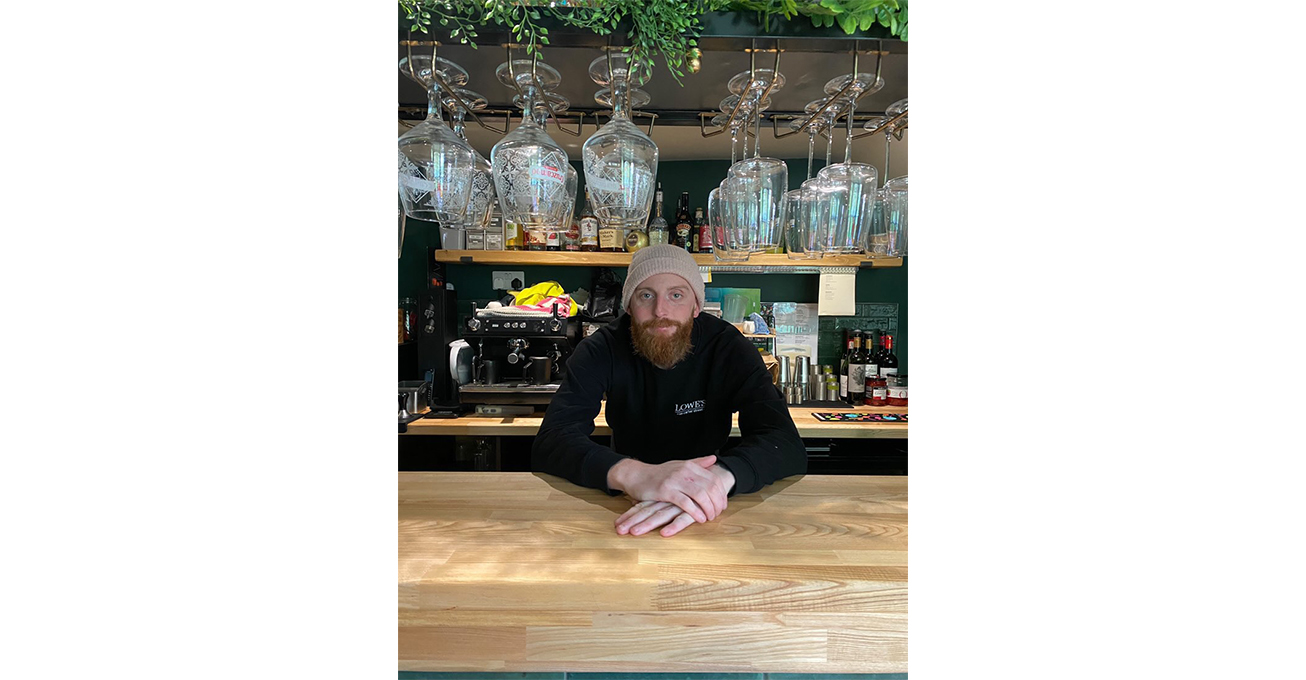

By Lowes’ Bistro Restauranteur and Chef George Lowe.
George Lowe’s culinary journey began at just 15, learning the basics in a village pub before studying professional cookery at the College of Birmingham and gaining invaluable experience at Michelin-starred Simpsons. His career has taken him from prestigious UK kitchens to Cape Town, where he spent four years working as a private chef for high-net-worth clients and helping to launch and develop restaurants. Back in the UK, he applied his expertise to menu and product development for major hospitality brands including Mitchells & Butlers, Greene King, Whitbread and Stonegate. Today, as chef-owner of the award-winning Lowe’s on Carter Street in Uttoxeter, George combines world-class experience with a passion for locally sourced ingredients, delivering refined, technique-driven food that has earned him a reputation as one of the region’s most exciting chefs. Here he tells us why fine dining might have had its day.
“The white tablecloth will survive. The silver service and 18-hour shifts won’t.
For decades, fine dining sold chefs a dream: keep your head down, work harder than everyone else, sacrifice your evenings, your weekends, your health and often your relationships, and one day you might earn recognition. Maybe a Michelin star. Maybe your own restaurant. Maybe a TV chef slot.
But the economics that propped up that culture no longer work.
We’re entering a new era where diners still want exceptional food and experiences, but the traditional fine dining model behind it is becoming increasingly unsustainable,” says George. “The public only sees the finished plate. They don’t see the labour, the stress, the staffing crisis and the financial pressure behind it.”
For years, high end kitchens operated on a model fuelled by endurance. Young chefs accepted long, punishing hours because they believed there was a long-term payoff. But today’s generation is looking at the realities of hospitality and asking a different question: is the reward actually worth the sacrifice, does the risk even given a reward anymore?
Those questions are becoming impossible to ignore.
Across the industry, labour costs are spiralling. Average staffing costs in hospitality are on average 40% of turnover, and often significantly higher in fine dining because of the sheer number of chefs required to execute and maintain intricate tasting menus and labour-intensive dishes.
At the same time, ingredient prices have surged. Our beef prices alone have tripled in the last couple of years, (because we buy the best), while energy bills, supplier costs and wages continue to climb across the board. Unlike many industries, restaurants cannot reclaim VAT on food purchases, leaving operators exposed to relentless inflation with little protection and a ceiling price on how much prices can be raised.
The result is a perfect storm.
“You simply cannot continue building businesses that rely on excessive labour, shrinking margins and exhausted people,” George says. “The old system depended on chefs overworking themselves into the ground because that was seen as part of earning your stripes. But younger chefs rightly want balance, progression and a life outside of the kitchen. Social media sells us the dream, that we can have it all right?”
That cultural shift is colliding head-on with customer expectations shaped by years of televised fine dining glamour.
Diners increasingly expect Michelin-level precision, theatre, presentation, immersive experiences even but many are simultaneously becoming more price sensitive amid the cost-of-living crisis. Restaurants are therefore trapped between rising operational costs and consumers who cannot endlessly absorb menu price increases.
Something has to give and often it’s the customer – which is why hospitality finds itself in so much trouble.
George believes the future of high-end hospitality lies not in abandoning quality, but in redefining what excellence looks like.
“There’s a misconception that accessible means lower standards,” he says. “It doesn’t. Guests still want incredible cooking, creativity and hospitality. But they also increasingly value warmth, authenticity and accessibility over formality and intimidation.”
That is one reason why the modern high-end bistro model is gaining traction. It strips away some of the excessive labour and rigidity traditionally associated with fine dining while still delivering premium ingredients, technical skill and memorable experiences.
“It’s about sustainability in every sense,” George explains. “Not just environmentally, but financially and personally too. You need a business model where staff can build careers without burnout and where restaurants can still make a profit without charging impossible prices.”
The warning signs for traditional fine dining are already visible.
Restaurants across the UK continue to reduce opening days, simplify menus and scale back service models simply to remain viable. Staffing shortages remain acute, particularly in skilled kitchen roles, while more chefs are leaving the industry entirely after reassessing the work-life balance hospitality often demands.
This creates a vicious cycle. Fine dining requires more skilled chefs to deliver increasingly complex food, but the pressures of the industry are simultaneously driving chefs away.
“The talent pipeline is under enormous pressure,” George says. “We’ve glamorised hustle culture in kitchens for too long. There’s incredible passion in this industry, but passion alone cannot compensate for burnout forever, nor can it make a restaurant viable.”
That does not mean fine dining disappears entirely. There will always be exceptional flagship restaurants pushing culinary boundaries and creating extraordinary experiences. But George believes they will become rarer, more exclusive and increasingly difficult to sustain financially.
The broader future of hospitality, he argues, belongs to operators who can combine quality with realism.
“The restaurants that survive will be the ones that adapt,” he says. “The industry has to move away from this idea that suffering equals excellence. Diners still want amazing food, but the industry now has to create a model that works for customers, businesses and staff alike.”
Because ultimately, the real luxury in hospitality may no longer be silver service or elaborate tasting menus.
It may simply be building restaurants where both chefs and businesses can still afford to thrive and help make out a memorable experience, but without the silver service and white gloves.”
To find out more about Lowes go to: www.lowesoncarterstreet.com