 Working at height remains one of the most significant risk factors in the construction and industrial sectors.
In the UK, falls from height consistently account for a high percentage of serious injuries and fatalities, making compliant fall protection systems a legal and operational necessity rather than a best-practice option. Among the most widely used collective and personal protection solutions are guardrail systems and safety line systems, each offering distinct advantages, limitations and compliance obligations.
Choosing between guardrails and safety lines is not simply a matter of cost or convenience. It requires a detailed understanding of regulatory requirements, site conditions, ongoing inspection responsibilities and long-term compliance considerations. This article explores the technical differences between the two systems and explains how to determine the most appropriate solution for sustainable compliance.
Understanding Guardrail Systems
Guardrails are a form of collective fall protection designed to physically prevent workers from reaching a fall hazard. They are commonly installed on rooftops, mezzanines, walkways, platforms and leading edges.
Key Characteristics of Guardrails
- Passive protection requiring no user interaction.
- Protection for multiple workers simultaneously.
- Continuous safety regardless of worker training level.
- Minimal operational disruption once installed.
In the UK, guardrail systems must comply with standards such as BS EN ISO 14122 and BS EN 13374 depending on application and environment. These standards define load requirements, heights, deflection limits and structural performance.
While guardrails are often perceived as a fit-and-forget solution, this is a misconception. Over time, exposure to weather, vibration and structural movement can compromise system integrity. Regular inspection and certification are essential to ensure systems continue to meet regulatory performance requirements throughout their lifecycle.
Professional guardrail compliance testing and certification such as that provided by
helps duty holders confirm that installed systems remain structurally sound and compliant with current standards.
Understanding Safety Line Systems
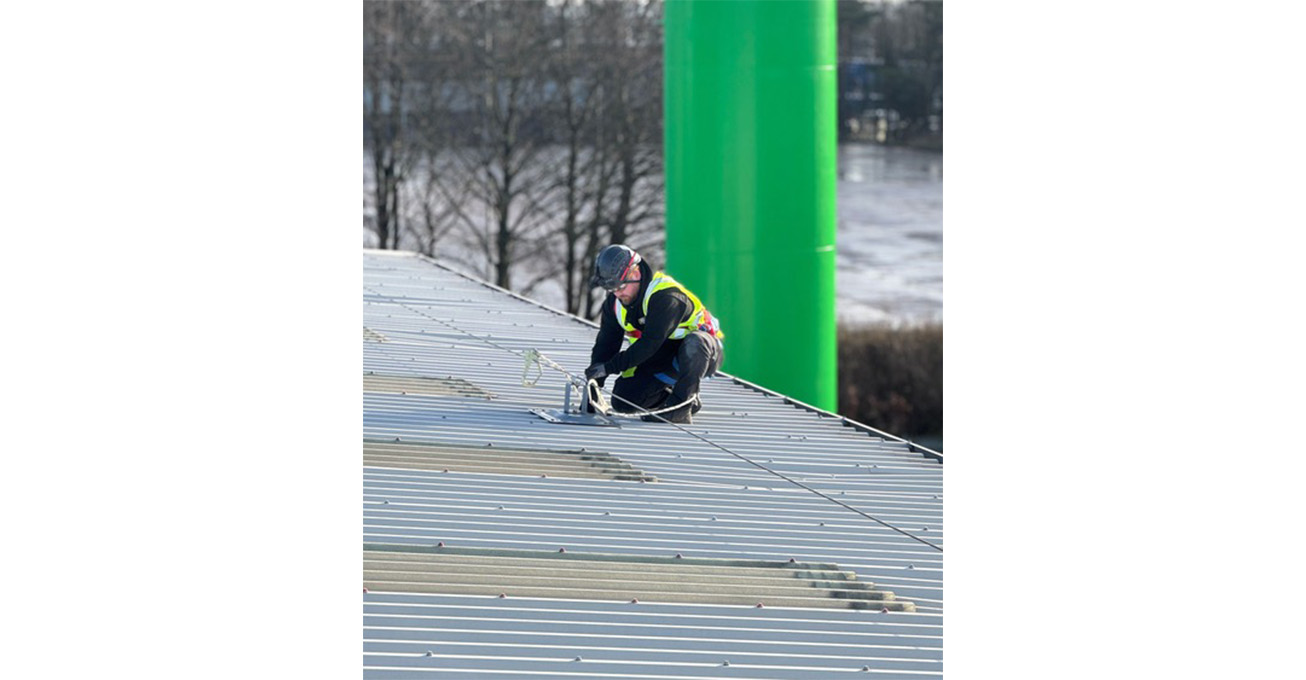
Safety lines, also referred to as lifeline systems or mansafe systems, fall under personal fall protection and require users to actively connect via harness and lanyard. These systems are commonly used where collective protection is impractical due to design constraints or access requirements.
Types of Safety Line Systems
- Horizontal lifelines.
- Vertical lifelines.
- Temporary or permanent installations.
- Flexible cable or rigid rail systems.
Safety line compliance systems testing are governed by standards such as BS EN 795, CEN/TS 16415 and BS 8610 for anchor devices. Unlike guardrails, safety lines rely heavily on correct installation, user training and ongoing inspection to remain compliant.
Even minor changes such as roof refurbishments, fixing degradation or cable tension loss can invalidate compliance. This makes routine safety line compliance testing essential, particularly for permanent systems exposed to long-term environmental stress.
Independent inspection and testing services such as ensure anchor devices, cables and end terminations continue to meet performance and load requirements.
Compliance Responsibilities: Guardrails vs Safety Lines
From a legal perspective, duty holders must ensure that any fall protection system is suitable for the task and environment, installed by competent professionals, inspected and maintained at appropriate intervals and supported by verifiable compliance documentation.
Guardrails and Compliance
Guardrails generally offer a simpler compliance pathway due to their passive nature. However, they still require initial load testing, annual inspection for corrosion, fixings failure and structural movement and certification following installation or modification.
Failure to maintain guardrails can result in non-compliance under the Work at Height Regulations 2005, particularly if deterioration compromises load resistance.
Safety Lines and Compliance
Safety line systems require more frequent and detailed oversight, including annual inspection by a competent person, verification of anchor integrity, load testing where required by manufacturer guidance and documentation aligned with relevant British Standards.
Because safety lines depend on correct user interaction, compliance also extends to user training, rescue planning and system suitability for the intended number of users.
Choosing the Right System for Long-Term Compliance
When evaluating which system is most appropriate, long-term compliance should be a primary consideration rather than initial installation cost alone.
Consider Guardrails If:
- The work area has consistent access requirements.
- Multiple workers require simultaneous protection.
- Minimal user training is preferred.
- Passive protection is structurally feasible.
Consider Safety Lines If:
- Architectural constraints limit guardrail installation
- Access requirements are intermittent
- Flexibility is required across multiple work zones
- A personal protection system aligns better with site operations
In many environments, a hybrid approach is adopted, combining guardrails in high-traffic areas with safety line systems for specialist or restricted access zones.
The Importance of Testing, Maintenance and Certification
Regardless of system type, compliance does not end at installation. Long-term legal defensibility depends on inspection regimes, maintenance schedules and accurate documentation.
Specialist providers such as Sky Height Safety support duty holders by delivering structured safety line compliance testing and guardrail compliance testing, maintenance and certification. This ensures systems continue to meet applicable British and European standards throughout their operational life.
Regular independent testing helps identify degradation at an early stage, reduces the risk of system failure and provides documented assurance for audits, insurers and regulatory inspections.
Final Thoughts
Guardrails and safety lines both play critical roles in managing work at height risks, but they are not interchangeable solutions. Each system presents different compliance obligations, inspection requirements and operational considerations.
By selecting the appropriate system for the environment and committing to regular testing, maintenance and certification, organisations can achieve sustainable compliance and long-term safety performance. In an industry where conditions and usage evolve, compliance must be treated as an ongoing responsibility rather than a one-time decision.