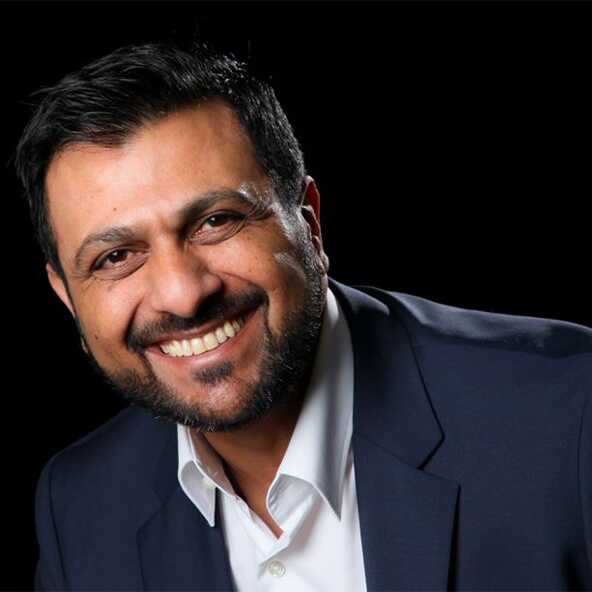

A leadership expert who has worked with NHS Trusts, police services and universities to help create more inclusive cultures says that the sport as a whole needs to change its approach to diversity in the wake of the Yorkshire Cricket Club scandal.
Kul Mahay, who spent more than 30 years working with Derbyshire Constabulary and was, at one time, one of the most senior Asian police officers in England believes that it isn’t just cricket where problems lie, after ex-Yorkshire spinner Azeem Rafiq spoke of being racially abused during his time with the club and gave evidence to the Department for Digital, Culture, Media and Sport (DCMS) committee earlier this week.
The chairs of the 18 first-class counties will meet with representative from the England and Wales Cricket Board (ECB) and the Professional Cricketers’ Association to discuss a one-point agenda on equality, diversity and inclusion within cricket shortly.
Kul, a leading specialist in emotional intelligence who works with a wide variety of industries, says that the ECB need a overhaul of their culture – and that inclusivity and trust needs to start with grassroots cricket.
“For too long, our approach to increased representation or inclusivity has seenb organisations running aroud, chasing demographic diversity targets. However, this comes from the false belief that all people from within minority communities are alike,” said Kul, “In fact, nothing could be further from the truth.
“Every single one of us irrespective of our colour, ethnicity, gender, ability, age, sexual orientation – whether we’re cricket fans, football supporters or not really into sport at all – is unique. This is the truth about diversity. We need to set our targets on creating cultures where difference of thought and experience is not only welcomed but actively encouraged. This is what will move us away from the current echo chambers that exist in the decision-making boardrooms in the country.
“Azeem’s story is truly heartbreaking; he has been incredibly brave in speaking out but, unfortunately, his story isn’t unique and until we change our culture as a country, there will be similar revelations like Azeem’s.
“We need to start creating cultures where everyone feels seen, heard, valued and appreciated and this needs to permeate to grassroot levels.
“The danger, not just for the ECB but for all organisations, is that if we don’t challenge and get our cultures right and take the focus off diversity, focussing rather on culture, then we will see more people leaving resigning.
“Across much of the world and in most industries, we are seeing something termed as ‘The Great Resignation.’ From sport to politics, engineering to teaching – organisations have seen singificantly increased turnover of staff over the last 18 months or so. More and more people are leaving their organisations because they don’t feel valued, they don’t feel safe, supported or appreciated. People have recalibrated their priorities during the pandemic and experience is as much as driver4 for satisfaction at work as monetary benefit, if not more. Organisations that do not understand the power of creating emotionally-intelligemt cultures at the deepest level may struggle to retain talent.
“The ECB needs to think carefully about what it does next. It does not want to become another organisation that repeats repeating ideas of the past, rebadging them as new and congratulating themselves on their creativity, but achieving only temporary success”
Kul talked about Nottinghamshire cricketer Alex Hales, who apologised for causing offence when pictures of him surfaced appearing to show the batsman in ‘blackface’ during a fancy dress party. Hales claims that the theme of the fancy dress party was ‘musicians’ and that he went as rapper Tupac.
“Alex Hales has stepped up and accepted that his actions were perhaps naïve and open to misinterpretation and critique.” he said, “My personal view is not so much about the intentions behind Alex’s actions but to question the culture that existed where he felt that it was okay to do what he did. The question in the current climate is also about how much has changed or improved in that culture.”
Kul says that cricket chiefs can learn from the progress made by the England national football team and praised men’s first-team manager Gareth Southgate for the way he responded to criticism directed at black players Marcus Rashford, Jadon Sancho and Bukayo Saka after the trio missed their penalties in the European Championship final against Italy in the summer.
“We have seen Premier League football teams spend incredible amounts of money buying the best players in the world based upon their technical ability,” said Kul, “yet they have suffered defeat after defeat because of a lack of spirit or cohesion within the team.
“Compare this to the Gareth Southgate’s England team, where the focus of the former Aston Villa man has clearly been on developing a healthy, inclusive and emotionally intelligent culture.
“Whilst they may not have won the European Championship, this team have achieved so much compared to teams before could not achieve over five decades. I’m looking forward to seeing how they progress in the World Cup next year.”