 Famous faces, including digital creator Lottie Tomlinson, motivational speaker Malin Andersson, TV presenter Richard Arnold and actress Davinia Taylor share personal accounts of grief in support of Sue Ryder’s Grief Kind campaign to help the nation better support loved ones through a bereavement.
A new survey commissioned by leading bereavement charity, Sue Ryder reveals that 86% of people who have experienced a bereavement in the UK felt alone in their grief, with the primary reason being that those around them didn’t know what to say or do to help them (81%).
Grief is something we will all have to go through, yet over two fifths (44%) of the British public admit that they have felt unsure of what to say when someone tells them a close relative or friend has died.
Recognising that it can be difficult to know how to support a loved one, Sue Ryder has launched Grief Kind, a new campaign which aims to equip people with the know-how and confidence to support friends and family through a bereavement, so that no one has to go through grief alone.
The famous faces supporting the campaign include digital creator Lottie Tomlinson, motivational speaker Malin Andersson, TV presenter Richard Arnold and actress Davinia Taylor, all of whom have first-hand experience of grief.
The celebrities have joined forces with Sue Ryder to create an emotive photo and video series to shine a light on what helped, or would have helped, them through their grief. In sharing their personal experience, the celebrities hope to enable others to better support grieving friends and relatives.
Sue Ryder ambassador and digital creator, Lottie Tomlinson (23) knows how vital support can be after a bereavement. Her mother, Johannah Deakin, died in 2016 from cancer, and Lottie’s younger sister, Félicité lost her life in 2019, aged just 18. Lottie advises people to ‘bring it up’, rather than shy away from the subject.
Lottie Tomlinson says: “When my mum and sister died, I quickly learned that many people didn’t know what to say to me. They were naturally worried about upsetting me, but I wish people would have brought it up more, as it helps if I can talk about my grief openly.
“When you’ve lost someone, you can feel like they are fading away. Talking about my mum and sister and sharing stories helps to keep their memory alive. I would advise anyone supporting a loved one after a bereavement to bring it up and give them a safe space to divulge how they feel.”
Speaking openly about death is something that Malin Andersson (28) believes would have helped her more through her own grief. Malin tragically lost her baby daughter, Consy, in 2019 just four weeks after giving birth. Her mother, also named Consy, died of stomach cancer two years prior and was cared for by her local Sue Ryder hospice.
After they died, Malin reveals that people were scared to talk about it with her, which made it difficult to share her feelings.
Malin Andersson says: “Grief is a very isolating and lonely experience, even if you have a strong support network around you. I know how it feels to go through a painful bereavement. Although the ache never really goes away, the initial period after the death of a loved one is particularly tough and talking about it can make a big difference.
“If you want to support a friend or family member through grief, do not avoid the subject. Ask how they are truly feeling. I still find it incredibly helpful to speak about my mum and daughter with friends and family. I hope that by sharing my experience, I can help others to have these tough conversations, so that no one has to feel alone in their grief.”
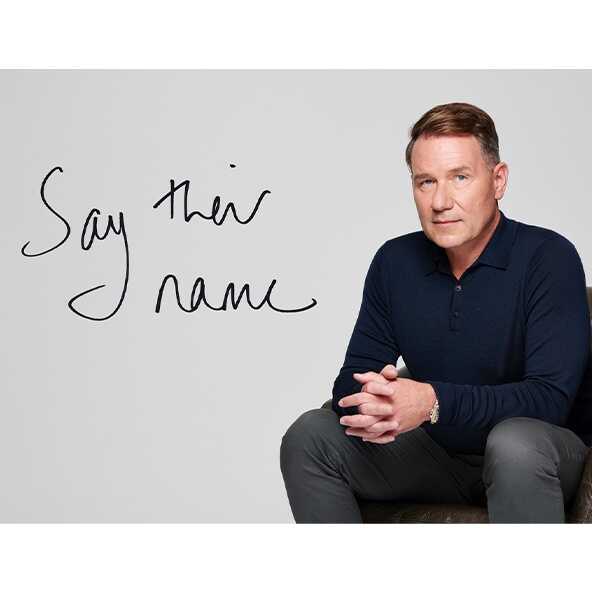
Presenter and Journalist, Richard Arnold (51), agrees. When his beloved dad Dave died in 2016, aged 81, Richard discovered how comforting it can be when grieving for a loved one to be remembered by name.
Richard Arnold says: “After the death of someone close to you, it can seem like people feel awkward or uncomfortable when it comes to saying their name in your presence. They become simply ‘he’ or ‘she’ or worse yet, are not mentioned at all. This is perhaps because friends or family worry that it might upset you or serve as a painful reminder of their death, but in my experience, it is so important for those around you to continue to say their name.
“No one wants to feel like their loved one has been forgotten, or as though they are the elephant in the room. After my dad died, the normality of other people talking about him and referring to him by name brought me a real sense of comfort. Even now, it is almost like hearing people say my dad’s name out loud makes him in some way immortal.”
Also sharing her support for the campaign is former Hollyoaks actress and interior designer, Davinia Taylor (43). After her mum, Lynn Murphy, died from breast cancer, Davinia tried to put on a brave face. However, she learnt how important it was to drop the stiff upper lip and is encouraging others to let their loved ones know that it is okay to cry.
Davinia Taylor says: “When my mum died, I felt so vulnerable. I tried to hide it, but I now understand how important it is to cry if you need to. In suppressing our feelings, we can actually do more harm than good.
“If your loved one is grieving, let them know that they can cry and be completely open about their feelings in front of you. Our tears release the hormone cortisol, which can build up in our bodies during periods of high stress and exacerbate our emotional pain. In my experience, allowing the tears to fall eventually helped to alleviate some of the hurt I was feeling from all of these pent up emotions.”
Heidi Travis, Chief Executive Officer of Sue Ryder says: “Sadly, as a society we are experiencing a moment in time where many of us will want to be there to support a grieving loved one. However, when it comes to something as tough as grief, it can be hard to know what to say or do that might help.
“People who have been bereaved have told us that all too often their loved ones and their support networks are so scared of getting it wrong that they do nothing at all. This is leaving many people feeling isolated in their grief.
“We want our Grief Kind campaign to provide people with advice, knowledge and confidence to help those close to them to navigate the toughest moments of their lives.”
Sue Ryder has launched the campaign to inspire the nation to be more Grief Kind. Right now, due to the coronavirus pandemic, even more people are grieving without the support that they need and being open to talking about grief has never been more important.
Sue Ryder research shows the following are the most useful things that people can do to help someone who is grieving include:
- Just being there without trying to ‘fix’ anything
- Talking about memories of the person who died
- Keeping in touch but not expecting a response
- Offering to spend time with doing things they enjoy
In addition, when it comes to words of comfort, the survey shone a light on the most helpful things people can say to a loved one to help them through a bereavement:
- Thinking of you
- I am here for you
- My favourite memory of them is…
- I am just a phone call away
Sue Ryder provides a range of online bereavement support, including free video counselling delivered through trained bereavement counsellors; an online community forum offering 24-hour peer to peer support and a wide range of advice and resources for people who are grieving or supporting someone through bereavement.
For more information and expert advice from Sue Ryder’s trained bereavement counsellors, visit sueryder.org/GriefKind.