
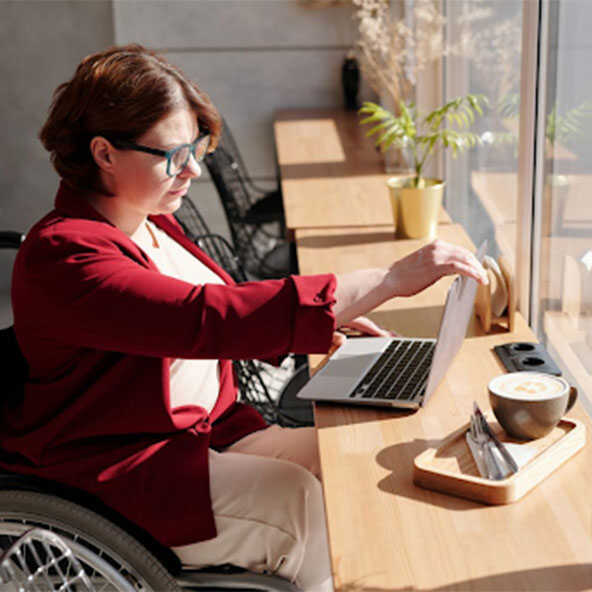
The 2020-21 Family Resources Survey revealed that there are 14.6 million disabled individuals in the UK. Disabled persons deserve equal access to opportunities. As such, many forward-thinking employers recognise the importance of making their workplaces more disability-friendly.
A disability-friendly workplace enjoys a broader talent pool and benefits from people with additional skills and creative business solutions. However, making your workplace disability-friendly is an intentional process you must invest significant time and effort into. Below are some things you can do to make your workplace more disability-friendly.
- Actively employ people with disabilities

One of the best ways to demonstrate your commitment to making your workplace more disability-friendly is to hire people with disabilities. Therefore, make this a crucial aspect of your company’s hiring policy to prevent financial discrimination, boost economic growth, and enhance corporate reputation. An inclusive recruitment process begins by reviewing your job descriptions to reflect the vital requirements of roles while noting any flexibilities. For instance, consider including a statement like this in your job advertising materials; “We are an equal opportunity employer who will offer reasonable adjustments for individuals with disability and neurodiversity.”
2. Make your workplace accessible
Your work environment needs to be physically accessible to all, including people with disabilities. If your office complex is a relatively modern building, chances are it already satisfies most of the requirements. However, companies located in old structures may not be as accessible, but you can make many physical adjustments to correct this. For example, repairing a lift in an old office building can do a lot to make it more accessible. Similarly, widen your corridors and doorways, add Braille on signage, and lower your handles, light switches, and countertops. You can also invest in additional or modified furniture and specialist lighting and ensure good visual contrast to improve accessibility.
3. Provide accessibility tools
Accessibility transcends merely making physical modifications that benefit people with disabilities. It also involves offering technology to improve a disabled employee’s ability to perform at the top level. Consequently, invest in tools like screen reader software, adjustable desks and monitors, and colour-coded keyboards. Also, invest in tools like Microsoft Office 365, which includes helpful accessibility solutions like narrator-to-red text, live call transcription, and closed captioning.
4. Educate your existing staff

Samsung UK’s recent poll revealed that Britain is a nation that is uncomfortable discussing disabilities. Indeed, almost 45% of the population admit to feeling uncomfortable saying “disabled” or “disability” in daily conversations, making the topic taboo. However, a sensitive, aware, empathetic, and informed staff is the foundation of all-inclusive workplace culture.
Therefore, you must convey the right message to your existing staff to create a culture that accepts and understands disabled people. For this, you can organise seminars and conferences and invite external individuals who frequently work with people with disabilities or with extensive knowledge of disabilities in the workplace to educate staff. Also, consider informing your employees about upcoming changes to the work environment intended to make it more disability friendly. Your employees may have some unique suggestions that work well, so keep this in mind.