
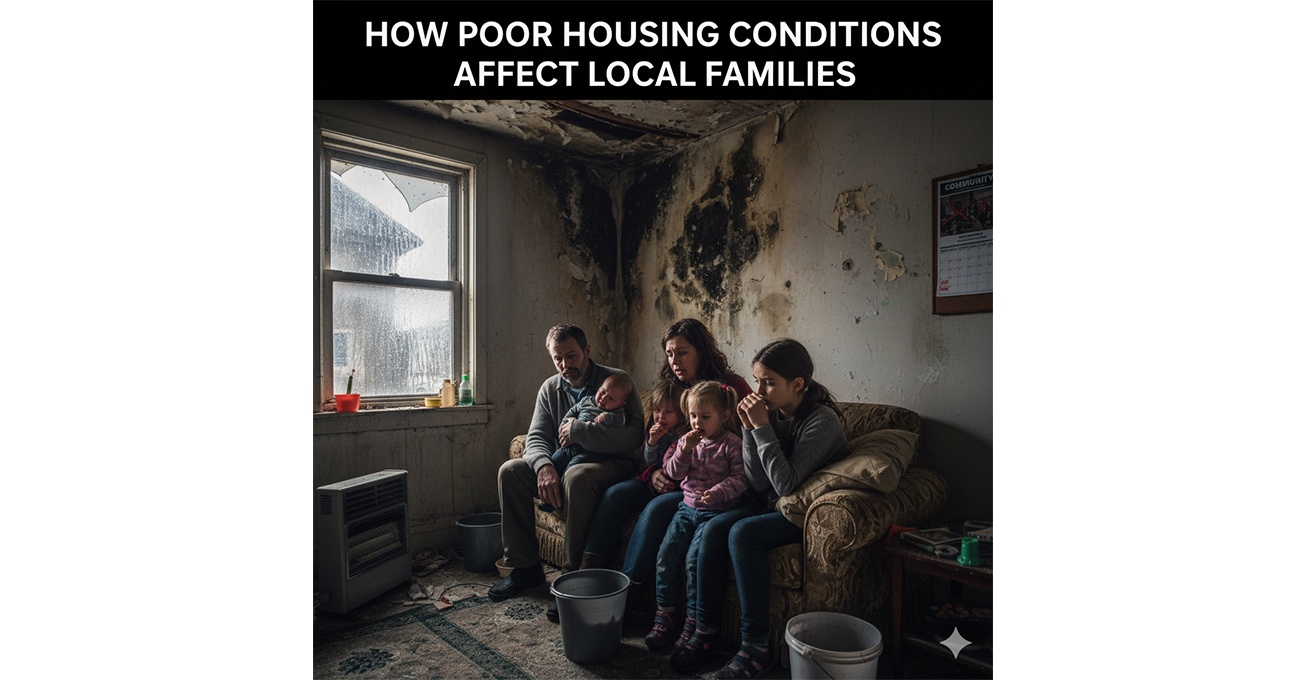
 A home should be a place of comfort, safety, and stability. Yet for many families, poor housing conditions make everyday life a struggle. Damp walls, mould growth, faulty heating, and structural issues are not just inconveniences – they are problems that directly affect health, wellbeing, and family life. Across the UK, thousands of households face these challenges, often feeling powerless when landlords fail to act.
Understanding how poor housing impacts local families is essential, not only for raising awareness but also for ensuring tenants know their rights and the steps they can take to protect themselves.
Health Risks for Children and Parents
The most serious effect of poor housing conditions is on health. Damp and mould, in particular, can trigger respiratory illnesses such as asthma, bronchitis, and recurring chest infections. Children are especially vulnerable because their lungs are still developing, and they may suffer more frequent illnesses, leading to missed school days and disrupted education.
For parents, living in a cold, damp, or unsafe home often results in additional stress. Worrying about children’s health, juggling time off work to care for sick family members, and facing higher medical bills all create pressure that could be avoided if repairs were addressed promptly.
Emotional and Mental Wellbeing
The strain of poor housing extends beyond physical health. Families living in substandard homes often experience higher levels of anxiety, frustration, and helplessness. Persistent issues such as leaks, infestations, or broken heating systems are not only disruptive but also create a sense of instability.
Parents may feel guilt or shame at not being able to provide their children with a safe environment, even though the responsibility lies with the landlord. Over time, this stress can contribute to serious mental health challenges, such as depression and chronic anxiety, affecting the entire household.
Financial Burdens
Poor housing conditions often bring hidden costs for families. Broken windows, draughty doors, or inadequate insulation make it harder to heat a home, leading to higher energy bills. Damp can damage clothing, bedding, and furniture, leaving families to replace items repeatedly.
For households already struggling with the cost of living, these additional expenses can push them further into financial hardship. It is unfair for families to pay rent on a property that not only fails to meet basic standards but also increases their everyday costs.
The Role of Landlords
By law, landlords must ensure their properties are safe and habitable. This includes maintaining the structure, ensuring heating and water systems are functional, and addressing hazards that could put tenants at risk. When landlords delay or ignore repairs, they are failing in their legal responsibilities.
Unfortunately, many families encounter landlords who dismiss complaints, delay action, or attempt temporary fixes that do not resolve the underlying issue. In these cases, families should not have to suffer in silence – they have the right to demand proper repairs.
How Solicitors Can Help
For families dealing with persistent disrepair, professional legal advice can make all the difference. Specialist solicitors understand the laws surrounding tenants’ rights and landlord obligations, and they can guide families through the process of seeking redress.
In many cases, pursuing Housing Disrepair Claims provides a practical solution. A firm trusted by families across England is SDS Solicitors, who operate on a No Win, No Fee basis and specialise in helping tenants resolve housing issues quickly and effectively. These claims can compel landlords to carry out essential repairs while also providing compensation for the distress, inconvenience, and health impacts suffered. With the support of experienced solicitors, families can take action confidently, knowing their rights will be protected and their voices heard.
Building Stronger Communities
The impact of poor housing conditions is not confined to individual households – it extends into the wider community. Children struggling with health or education because of their home environment may find their opportunities limited later in life. Parents under financial or emotional strain are less able to contribute fully to their communities.
Conversely, ensuring that families have access to safe and well-maintained housing creates stronger, healthier neighbourhoods. It reduces pressure on healthcare services, supports children in achieving their potential, and fosters a greater sense of security and wellbeing for all.
A Right to Safe Housing
No family should be forced to live in a home that undermines their health and quality of life. Poor housing conditions have wide-reaching consequences, affecting physical health, emotional wellbeing, and financial stability. Tenants deserve better – and the law is there to ensure they receive it.
By standing up for their rights and seeking support where needed, families can protect themselves and help to raise standards across the rental sector. A safe home is not a luxury – it is a basic right, and every family should be able to depend on it.