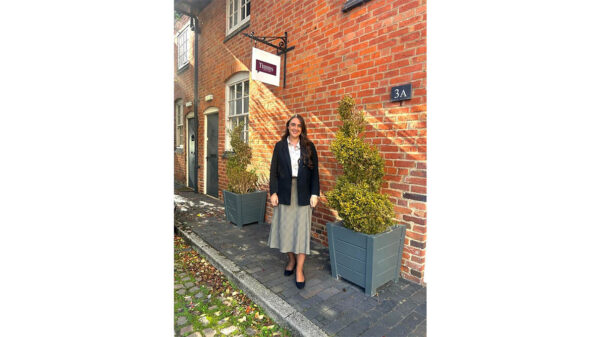
 Thursfields Solicitors has issued guidance on what people need to know about divorce, and how to keep breakdowns as amicable as possible.
The advice from the leading Midlands law firm comes with the arrival of what’s branded as ‘Divorce Day’ – the first working Monday in January.
Thursfields, which won the ‘Family Law Firm of the Year’ award for the Midlands at the Family Law Awards in 2018, said financial pressures and family tensions over the Christmas period often make couples question their relationship and potentially end their marriage.
Jasdeep Nagra, a solicitor in the Family department at Thursfields’ Halesowen office, explained: “The increase in divorce and separation enquires following the festive break has resulted in what the industry has come to know as ‘Divorce Day’.
“But it’s not as simple as it sounds. In England and Wales, the only ground for a divorce is the irretrievable breakdown of a marriage, and this means it has to be shown that the marriage has broken down and cannot be re-established.”
Ms Nagra said that while many couples aim to keep divorces amicable, the UK does not currently have a ‘no fault’ divorce.
This means the Petitioner (the person applying for a divorce) has to rely on ‘unreasonable behaviour’ for the divorce to be successful, which often involves saying negative things about their partner.
With this in mind, Ms Nagra said the most amicable fact parties can rely on is a two or five-year separation, where they must demonstrate they have been separated for two or five years.
The significant waiting period can be unappealing to some people, but Ms Nagra highlighted that couples can be deemed ‘separated’ while living in the same household.
However, she said they would need to demonstrate that although they are living under the same roof they are living separate lives – in terms of sleeping, eating and household chores.
The main concerns for some when separating from their partner will be in relation to their finances, including joint savings, and jointly owned family home and pensions.
The starting point for any court, Ms Nagra said, will be to spilt assets 50:50, although specific special contributions made by either party can be taken into account.
Spouses can claim a variety of financial shares including orders for periodical payments, lump sums, property adjustments, pension sharing and orders for child maintenance.
In deciding on any orders, a court always considers criteria in Section 25 of The Matrimonial Causes Act 1973, with the first consideration being the welfare of any minor children under the age of 18.
In considering finances, Ms Nagra said: “In many heterosexual relationships, the wife has typically maintained the household and looked after the children, while the husband works to provide for the family financially.
“In such examples, the husband will have built up a pension to assist him financially in later life, and some make the presumption that a pension is not classed as a matrimonial asset, but it’s actually just as important as the family home.
“This is because when both parties look to retire, the husband will be able to live a comfortable life with income from his pension, whereas the wife will be at a disadvantage, as she has not been contributing towards a pension and so her income will be significantly lower.
“In such situations, a court may order a pension sharing order in favour of the wife.”
Ms Nagra added: “When a couple decide to end their relationship it has life-changing consequence for all involved. It’s therefore strongly advised that individuals seek assistance from legal advisors in order to ensure the best possible outcome of themselves and their children.”
Thursfields Solicitors is currently offering initial advice consultations for a fixed fee of £200.00 including VAT.