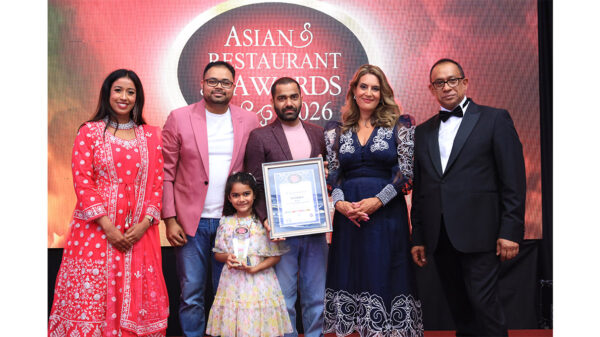
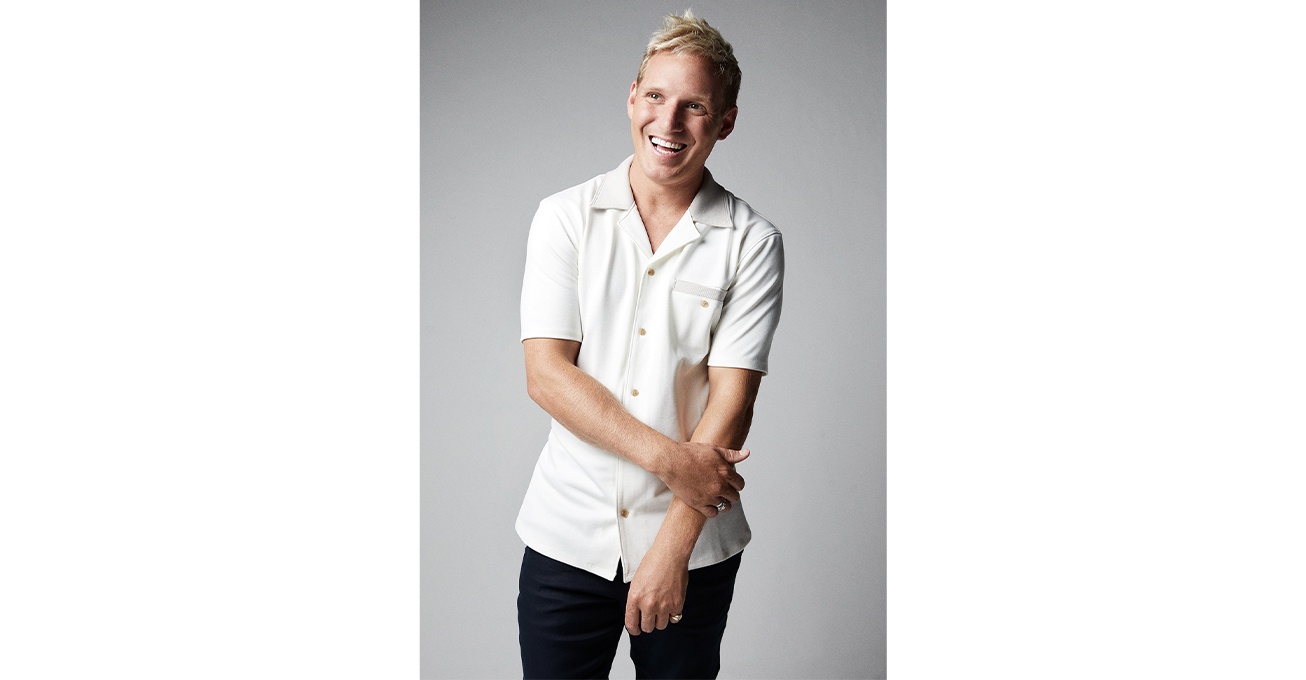

Broadcaster, Entrepreneur and Producer, Jamie Laing is spearheading the way for others across the UK.
A seasoned entrepreneur, Jamie has founded his own production company, JamPot Productions and is the co-founder of Candy Kittens, where they sell on average a packet of sweets every 3 seconds, making it the fastest growing confectionery brand in Europe. Jamie has over 1.2 million followers across his social media platforms and presents his own podcasts ‘Great Company’, ‘Newly Weds’ with his wife Sophie and the popular drive-time show across BBC Radio 1.
- Tell us a little bit about Candy Kittens, JamPot Productions and The Sweet Factory
We started Candy Kittens about 13 years ago, it is a vegan confectionery company. The idea behind it is that we want to remove all nasties from all sweets, so gelatin and all those kinds of things, but we don’t hinder the taste. So we make the best sweets in the entire world so no nasties and no gelatine or anything like that, we use real fruit juice, we use coconut water and make them delicious and amazing in every single way. The Sweet Factory is our office that we have opened up in Marylebone, which is amazing because I have my two companies Jampot Productions and Candy Kittens, and so now they are all in one place together which is just the most amazing thing in the entire world.
2. How did you get into the industry?
Honestly, it’s one of those things that lots of people kind of think, how do you get into these types of things. I have always loved sweets, ever since I was a kid I’ve loved sweets, I have always wanted a sweet shop, Willy Wonka is one of my heroes and I decided with my business partner Ed Williams that we were going to start creating sweets and sell them in packets and sell them to everyone, it was honestly kind of that simple. It is much more complicated when you try to figure out how to actually make sweets and find out how difficult all of that is, but I got into it for my passion and love for confectionery, I have always loved it.
3. What are the biggest opportunities and challenges in your industry?
The biggest challenges are, really boringly, the challenges that happen with the FMCG (Fast Moving Consumer Goods) and typically food and beverage is always about money. The problem with this kind of category and sector is that you constantly have to hold stock, stock also goes off, it has a sell by date and you have to sell it before the sell by date. Margins are typically quite low, so you are constantly worried about cash. Unfortunately, money is oxygen, it helps you breathe so those are the big challenges in this kind of area. Also, the challenges are the constant changing in people’s needs and wants, rules when it comes to what you can sell and eat and buy and ingredients and things like that, which are really important so constantly moving things around. So, those are the real challenges that you face but the biggest opportunities is that the industry is in some ways really archaic, when we came into the sweets/confectionery sector, no one had ever really challenged sweets, they were always the same, 150 year old sweets, that were all the same, same kind of packaging same kind of flavour, same kind of ingredients, same kind of branding. We came in and disrupted and I see that in lots of categories, there is a real place to disrupt in the sector.
4. How would you describe your leadership style?
I would say chaotic, I would say that I am empathetic, and when I say that, everyone is on the same level. Culture for me is massively important, so I try and make sure everyone is happy and feeling like they are progressing in the workplace because I truly believe that if you are happy in the workplace you get better results. So, I would say as a leader I am quite hectic but I would say I lead by example, I work hard, I turn up early and I leave late, and I think that is a good thing to do.
5. How do you get the most out of the people who work for you?
Honestly, treat people with respect. The best way to do things is you treat people with respect, make sure you are always encouraging them to push their boundaries and taking risks. Encouraging them that making mistakes is fine to do and making sure they feel like they have a bright future because at the end of the day I always feel really privileged that people are coming to work with me rather than the other way around. I am so grateful that people want to do that and give their lives to the business so I think treating people with respect, making sure they are able to take risks and also never micro-managing, so I allow them to make their own mistakes and learn from them.
6. What are the most crucial elements to your business running smoothly and being successful?
Culture is one of the biggest things, I got back to that word, I think making sure you have a happy place where people want to come work. There was a great statistic that came out that said people would rather be congratulated for their work than be given a pay rise. I think creating a great culture in the workplace helps businesses run smoothly successfully. Also having a clear vision, knowing exactly where you are heading, and knowing your destination. Don’t veer off and go somewhere else, know exactly where you’re going and allow the team to know exactly where you are going and I think that really helps. Also being transparent, I think transparency is totally key, know what you are trying to hit, know what your margins are, know what your revenue is, what your PNL is, be completely transparent I think that really helps. And allow people to get involved with everything, within reason, but allow people to run their own ways. I truly think trust is a really important thing, we have flexi working hours, we have unique holiday schemes, I think giving people trust in those really helps businesses run so smoothly. Also leading my example, business is hard, you’ve got to work hard but also we have a great time while we do it, I think that really creates success.
7. How has the past 12 months been for you?
From a business side, it has been a lot of work, we have just moved into The Sweet Factory is our brand new office which we renovated and did which has been amazing but stressful in lots of different ways. The last 12 months has been full of adventure and it has been very exciting. Work has ramped up, we have employed more people, we have more overheads, we sell more sweets, we do more podcasts, so everything has become busier but at the same time that’s what you kind of wish for. For me it’s about finding little pockets of moments when you can actually be mindfulness, so that’s what I am trying to do.
8. What will the next 12 months look like for your business?
The next 12 months are really crucial, we are driving sales we are looking at new flavours and things for Candy Kittens, we are working with other creators to create sweets for them, we are creating more podcasts for Jampot, loads is going on it’s a really exciting time and we are growing the business. We sell a packet of Candy Kittens sweets every 3 seconds and our awareness is up to nearly 40% percent and we are just trying to drive that up and up all the time.
9. What are the highlights of your career so far?
Cheesy enough, getting married, definitely one of my career highlights. Moving into our new office, The Sweet Factory, bringing both my businesses together, well three business we also have a business called Tuck Shop, which is an investment incubator were we help people grow and develop startup businesses as well as new businesses and bringing that all into one house is really exciting, that was a real career moment for me. And when we first got into our first retailer which was Waitrose, nobody believed that Candy Kittens would be a thing and then suddenly we are on the shelves at Waitrose and that was a huge moment for us, that was incredible. On a personal level, lots of other things but business and getting married has been my highlights.
10. What’s the biggest business mistake that you’ve learnt from?
Couple of things, I think realising how important money is and understanding your cash flow. I was never big on numbers, I never really enjoyed it that much or thought it was that important to worry about overheads, and for us that was probably the biggest mistake, again going back to money is oxygen, it helps you breathe. The biggest business mistake I made is that I am so impatient. I want things to happen now, but things take time. Realising that you have to be patient in order to be successful, so learning that patience is key and money is oxygen, those were the two big things for me.
11. What’s the best piece of business advice you’ve been given?
A few ones, but someone told me once that business is paid in two currencies, cash and experience, take the experience first and the cash later. Don’t do something because you want to make money, if you do that it will fail because at the end of the day money is kind of a byproduct of what we do. If you are interested in money or cars or men or women, there is never enough so you will never be fulfilled so focus on what you genuinely enjoy. The other piece of advice is 50% of business is just showing up, just do it, Nike said it so well, just start doing it. Everyone finds reasons why they don’t do things, “I’m too busy, I’m this, I’m that”, just do it, just turn up and do it. That for me is totally key.