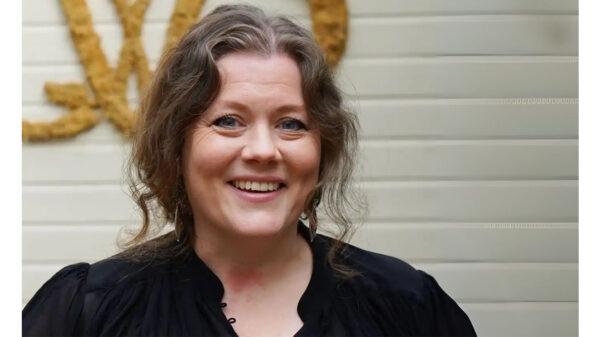


I’m Rachel Watkyn and I’m the CEO of the Tiny Box Company.
I started the company back in 2007, from my bedroom and honestly never thought we’d have a £10 million turnover and be the UK’s largest online gift packaging e-commerce company.
- Tell us a little bit about your business…
One of the goals I set when I started the company was for us to help make sourcing sustainable and ethical packaging more accessible, especially for SMEs. Before I started Tiny Box, I was making ethical jewellery and realised I couldn’t find sustainable boxes anywhere. I couldn’t believe how hard it was to find a packaging company from which I could order a small quantity of boxes.
I saw the gap in the market and knew that was my in.
- How did you get into the industry?
I got into the industry purely out of desperation.
I needed boxes for my jewellery company and couldn’t find any that had been made ethically. I realised that if this was a problem I was having, then there must have been other businesses that were struggling too. My jewellery was ethically made, so I wanted packaging that was also ethically made and had been produced in a sustainable way.
- What are the biggest opportunities and challenges in your industry?
I think that whenever there are lots of big opportunities, there are also many challenges that come along with them.
One of the biggest opportunities is that people will always need some form of packaging! We’re also always going to need some form of packaging. As a society we’ve also become more aware of sustainability and how we can and need to incorporate small changes into our daily lives.
One of the biggest challenges is that there are a lot of competitors, so we have to make sure we’re giving our customers something they can’t get elsewhere. This is a challenge because we’re always having to ensure that we’re ahead of our competitors and that we stay ahead of them.
Another challenge for us, which you may not think affects packaging, is trends. Trends change so quickly, which means we have to be able to change our designs and ideas to keep up, especially when we start designing our Christmas range. At the moment, people are leaning more towards a basic design and less luxury so we need to be well-versed to ensure we give our customers what they want.
- How would you describe your leadership style?
I’d say my leadership style is very democratic, but I could do with becoming a little firmer at times. I like my team to feel as though they can try new ways of completing tasks and getting the answers; it doesn’t have to be the same process just because it works. If there’s a different way of getting the job done that may be more effective or efficient, then I’m all ears. I’d say I lead like a typical entrepreneur really, and I love creativity and self-driven employees who are going to get the job done.
Something I’m not very good at, though, is following processes. That’s never come naturally to me, but I have people around me who love to follow the process and are very good at problem-solving, so we balance each other.
- How do you get the most out of the people who work for you?
I try to lead by example and never ask someone to do a task that I am not prepared to do myself. Additionally, I promote freedom in the workplace so people can find their own routes to achieve the end result.
A significant aspect for me is ensuring that people receive credit for their work, rather than managers taking all the glory. It doesn’t matter if you’ve just joined the company or been with us for five years; if you have a great idea that benefits the company, you will receive the credit for it.
- What are the highlights of your career so far?
I’ve had some incredible opportunities in my career that have included traveling and being based in Sierra Leone for a year. At the time, I was helping to install a software programme and being based in Sierra Leone really allowed me to see the world from a different view.
Having had the opportunity to see diversity across a range of industries around the world is a highlight for me and something I had never thought I’d be able to do.
Of course, I had the privilege of going on Dragons’ Den, which is where I met Peter Jones and Theo Paphitis, who became investors in Tiny Box Company. I think my most recent highlight was earlier this year when I was awarded an OBE for my contributions to Sustainability and Ethical Business Growth.
A new highlight is that I’ve been given the opportunity to have a book deal, which is now available for pre-order on Waterstones!
- What will the next 12 months look like for your business?
Busy! I want to continue to grow Tiny Box Company and find new ways of keeping us as the top UK sustainable packaging supplier, so new processes and breaking into new markets will keep me busy.
We’ve been given a publication date of Summer 2025 so that’ll challenge me and be a new venture that I’m really looking forward to.
- What tempted you to get involved in the #SBS Invest competition as an investor?
Theo asked me to be involved, and I wouldn’t dream of saying no! It’s a wonderful opportunity to help other businesses grow and have the same opportunities I was given. Having the ability to support a smaller business or a start-up is a great chance to pass on some of the things I’ve learned over the years.
- What kind of things do you look for in a business when looking to invest?
It’s all about the people. You need to be able to see that the people in the business have the drive and ability to push the business and keep it moving forward. Having a business isn’t easy, and you need to have a great team around you that balances out your weaknesses with their strengths.
The business idea is often secondary. It can be a great idea, but if you don’t have people behind it who can drive the business, then it may not go the distance.
- What does mentoring small businesses mean to you?
It’s a fantastic privilege to work with other businesses and get to see how they work and what new ideas they’re bringing to the team. As fast as I’m mentoring, I also get to learn of new and better ways of how to build a business and make it stronger.
It’s a two-way exchange of information.
- What’s the best piece of business advice you’ve been given?
From one of the Dragon’s right-hand men, I was given the advice that with any business plan, you need to double the timescales and halve the revenue (EBITDA). I took this advice and have used it ever since. It tends to be a pretty good metric as people always overestimate what they think they’ll achieve. It gives you cushion so if you make an error, you have time to correct it.