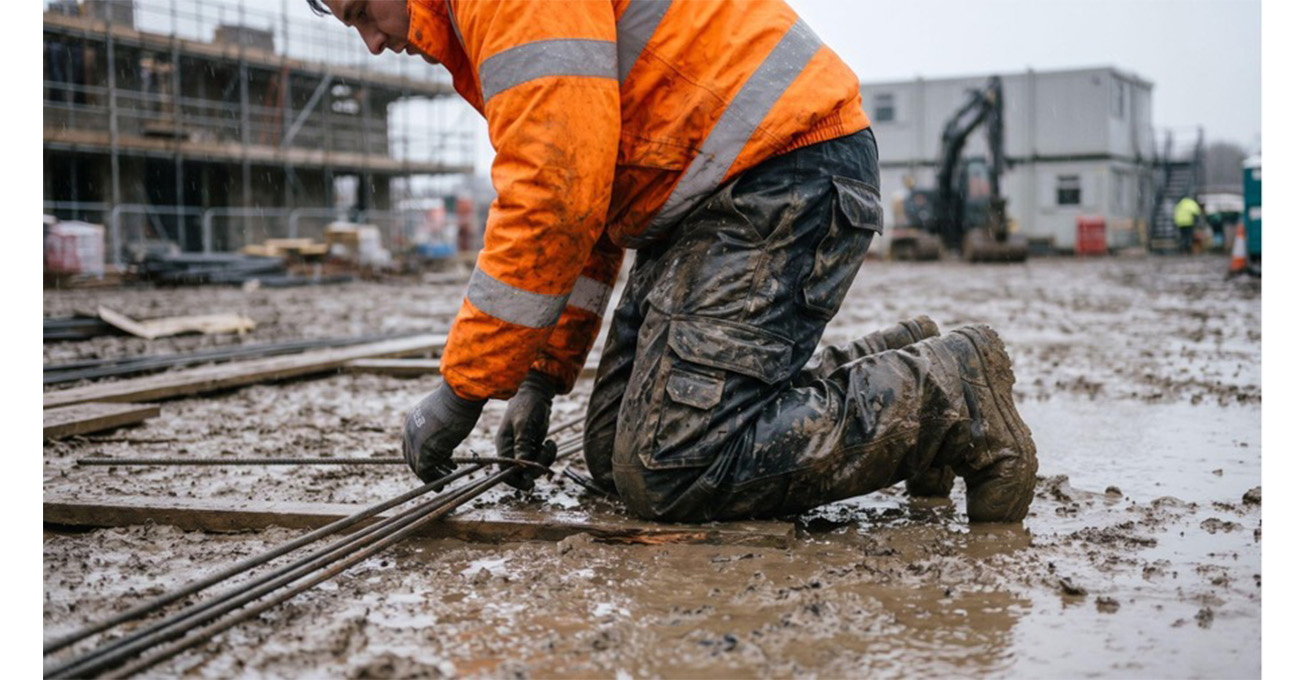
Choosing winter work trousers comes down to three simple questions. How exposed to rain are you, how hard are you working and do you also move between different work environments, such as vehicles, warehouses and outdoor sites?
Waterproof work trousers suit long spells in persistent rain. Thermal and fleece lined trousers suit cold, dry days with less movement. Layering covers the changeable weather in between. This guide explains each option, the standards worth checking and what to consider when kitting out a crew.
The quick answer: which winter trousers suit your job?
The best winter work trousers depend on rain, activity and movement, not a single spec. Use the table below as a starting point, then check the details in each section. If two rows fit your day, layering is usually the safest answer.
| Conditions | Best Option | Typical Jobs |
| Persistent rain, moderate activity | Waterproof work trousers | Groundworks, landscaping, forestry |
| Cold and static, mostly dry | Thermal work trousers | Events crews, banksmen, traffic marshals |
| Cold and dry, all-day wear | Fleece lined work trousers | Yard and logistics operatives |
| Changeable weather, in and out | Layering with waterproof overtrousers | Drivers, delivery crews, site managers |
For roadside and highways work, choose hi-vis waterproof trousers and check the class your contract requires. Hi-vis requirements vary between clients and contracts. Never assume a pair of trousers meets them on its own.
Waterproof work trousers: what to look for
Waterproof work trousers use a membrane or coating to stop rain reaching your skin. A membrane is a thin inner layer that blocks water but lets sweat vapour escape. The seams are then taped, meaning sealed with waterproof strips over the stitching. Without taped seams, rain can work through every needle hole.
Waterproof vs water-resistant: what’s the difference?
Water-resistant trousers shed light showers but soak through in sustained rain. Waterproof trousers keep rain out for long periods, thanks to a membrane and sealed seams. If you work outdoors for hours in wet weather, water-resistant is not enough. It still has its place on drier, more active days.
Why breathability matters as much as waterproofing
Active work makes you sweat, even in freezing weather. If that moisture cannot escape, it soaks your base layer from the inside. You then chill quickly when you stop for a break. Breathable waterproof trousers let sweat vapour out while keeping the rain out.
The smaller details matter too. Look for side zips that open wide enough to pull trousers on over boots. Adjustable cuffs stop water running down into footwear, and knee pad pockets protect anyone kneeling on wet ground. When comparing waterproof work trousers, check the rain rating, taped seams and breathability against how hard you work.
Thermal and fleece lined work trousers
Thermal work trousers use insulation to trap warm air close to your body. They suit static or slow-paced roles, such as marshalling, banksman duties or long event shifts. Fleece lined work trousers are lighter, with a soft brushed lining inside a standard outer fabric. They make a comfortable everyday choice for cold, dry days with steady movement.
The main trade-off is heat build-up. Insulated trousers can feel too warm for heavy, physical tasks. Lined work trousers also take longer to dry once they get wet. That matters on sites without a proper drying room.
Are lined work trousers waterproof?
Most lined work trousers are not waterproof. They are built for warmth and offer little protection from sustained rain. Only trousers with a membrane and a rain rating on the label are reliably waterproof. Some lined styles do combine both, so always check before you buy.
When layering beats all three
For workwear trousers, layering means a base layer, stretch work trousers and packable waterproof overtrousers. Overtrousers are loose shell trousers you pull on over your normal pair when rain arrives. This system suits drivers, delivery crews and anyone moving between cabs, warehouses and yards. You add or remove protection as conditions change, rather than overheating indoors. Workwear trouser bundle deals make it easier to keep a spare pair of stretch trousers on hand.
What should I wear under work trousers in winter?
Wear a close-fitting, moisture-wicking base layer made from merino wool or a synthetic fabric. These materials move sweat away from your skin, so you stay warmer and drier. Avoid cotton, which holds moisture and chills you once you stop working. Thermal leggings work well under stretch trousers on the coldest mornings.
The standards worth checking
Rain protection was rated under EN 343 until it was replaced by EN ISO 24232 in late 2025. The classes stay the same, and garments certified to EN 343 keep that certification until it is renewed. Garments get two ratings from one to four: one for waterproofing and one for breathability. Class 4 is the highest for each.
For warmth, EN 14058 covers garments for cool conditions above −5°C. That covers typical UK winter conditions. EN 342 applies at −5°C and below, and assesses complete clothing ensembles. Hi-vis trousers are rated under EN ISO 20471. Trousers alone can reach Class 1 or Class 2, but Class 3 usually means pairing them with a certified hi-vis jacket. Reaching a higher class means pairing them with a jacket certified to work alongside them.
Kitting out a crew for winter
Buying for a team adds a few extra decisions. Two pairs per person lets one dry overnight while the other is worn. Keep the spec consistent across the crew, and match the hi-vis class to your jackets. Since 2022, employers’ PPE duties also extend to casual workers, known as limb (b) workers.
Buying trousers, jackets and hi-vis together keeps sizing and colours consistent across the team. Look for a supplier with no minimum order quantities. That way, even a three-person crew can order exactly what it needs. Workwear bundle deals then make it simple to kit out the whole team, whatever its size. Small firms deserve the same branded kit as large contractors.
Branding waterproof trousers needs more care than branding a polo shirt. Embroidery stitches the logo into the fabric, but every needle hole can pierce a waterproof membrane. Unless that area is sealed afterwards, heat-applied transfers are usually the safer choice. These bond a printed film to the surface without piercing the fabric. A good supplier will recommend the right method for each garment.
Always ask for a proof before production starts. A proof is a visual showing the logo’s size, position and colours on the garment. On hi-vis trousers, a large logo can cover fluorescent material and affect compliance. Suppliers who decorate in-house can usually turn orders round faster and keep reorders consistent. If a cold snap arrives early, ask about next-day despatch options rather than making do.
Getting winter trousers right
Whatever you choose, start with those three questions about rain, activity and movement. Match your trousers to the hardest part of the day, not the easiest. Then check the label, because the ratings matter far more than the marketing.