

The evidence is clear – the higher education system needs an overhaul. At traditional universities students must cram their heads full of academic information for three years as they build up to their exams, then graduate into the world of work where academic experience has almost nothing to do with real life. Their reward in some cases might be a higher income but the statistics are telling a different story.
One of the key takeaways from this year’s A level results is that the gap between the highest and lowest performing regions in the county has grown again pointing to a glaring social mobility issue in the UK. In London, 54 per cent of young people go to university, in Herefordshire, the figure is just 26 per cent and in the North East it is just 22.9 per cent.
Despite the struggle for those on lower incomes to get to university, the office for National Statistic records that more than a quarter of graduates in England are not in medium or low-skilled jobs. Employers are disregarding degrees and prioritising skills and experience. They are dropping degree requirements in job adverts. Accenture, BAE Systems, Rolls Royce, Google, Apple, IBM, and Tesla are just a few of many companies prioritising skills and experience over traditional degree qualifications in some hiring practices.
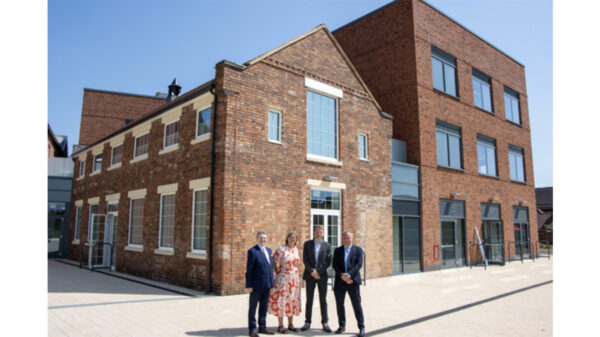
The New Model Institute for Technology and Engineering (NMITE) in Hereford, is one example of what could be achieved with a different approach. The university has always encouraged more applications from people from less well-off backgrounds using bursaries and scholarships to remove at least some of the financial barriers talented young people face. Students from all walks of life and at varying life stages are welcomed in the belief these differing perspectives are exactly what the engineering industry in the UK needs.
As a result, students report a real sense of achievement. They are technically proficient but also practically skilled and emotionally intelligent which is attributed to a studio-based learning environment, constant interaction with industry partners and an extensive use of innovative assessment methods. Students are used to having to share their thinking process and justifying their proposals and almost 100% of the first cohort of graduates found jobs at highly respected global firms including BAE Systems, Mondelez, Kier, Balfour Beatty and Rehau.
We know that many students question whether university is a better choice than an apprenticeship. They worry about debt and delay. The accumulated student debt in the UK is enormous, standing at more than £250bn. This must be addressed by offering faster, lower cost routes to a great career.
Additionally, engineers who succeed in work, often do so because they are skilled in ways not normally associated with engineering, such as creativity, communication and teamwork. Curiosity, determination, grit and interpersonal skills are equally as important to as an academic track record.