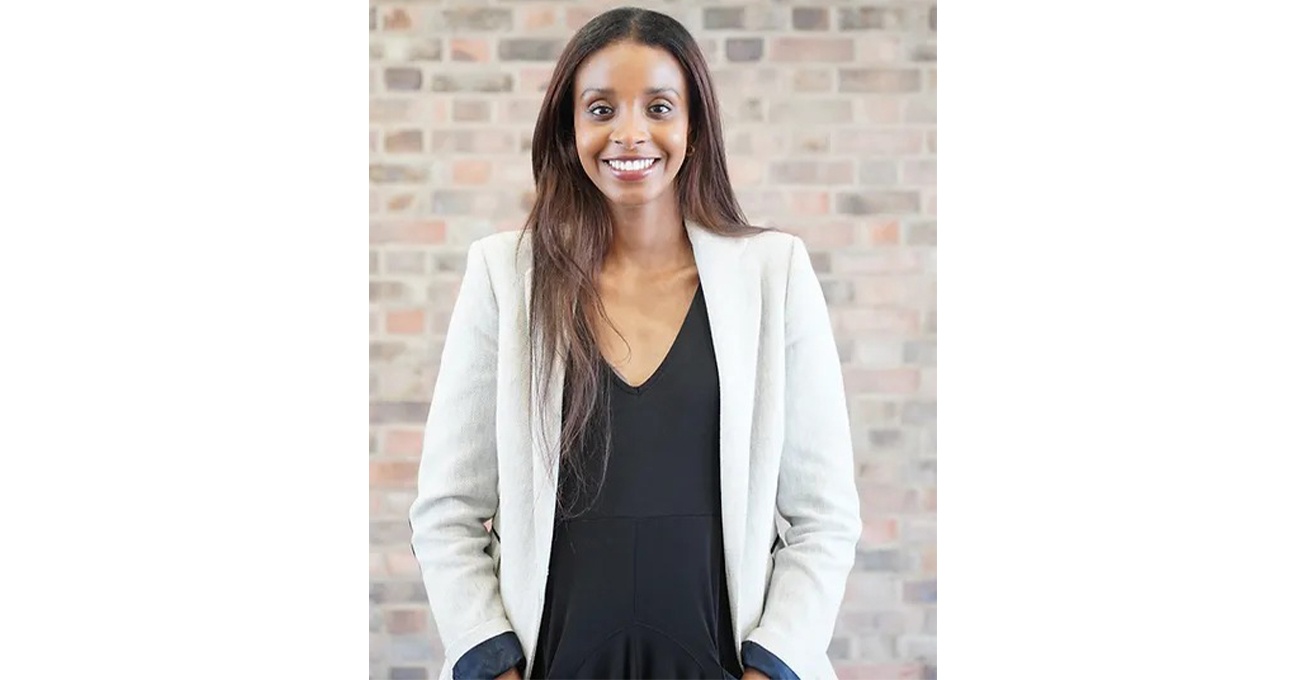

Muna Daud, a visionary innovator, is the driving force behind FlowSense, a groundbreaking period detection device that empowers visually impaired women to take control of their menstrual health. Muna’s passion for accessibility and inclusive design has led her to create a discreet, accurate, and non-invasive solution that not only tracks menstrual cycles but also provides valuable insights into overall vaginal health.
Muna’s journey into the world of HealthTech began during her undergraduate studies in Biomedical Engineering, where she focused on designing medical devices that could improve the lives of individuals with disabilities. This early interest in accessibility laid the foundation for her future work. After completing her Bachelor’s degree, Muna pursued a Master’s in Innovation Design Engineering at Imperial College London and the Royal College of Art. This interdisciplinary program allowed her to explore the intersection of art, design, and engineering, further fuelling her creativity and innovation.
It was during her Master’s studies that Muna recognised the significant challenges faced by visually impaired women in managing their menstrual health. Inspired by the limitations of traditional pregnancy tests, she embarked on a mission to develop a solution that would address this unmet need. Seeing a gap in the market, and asking herself ‘Why not me?”, she developed FlowSense.
- Tell us a bit of your business?
In a world that often overlooks the needs of women, particularly those with visual impairments, FlowSense is breaking barriers with the world’s first patented period blood detection device. The device not only addresses the challenge of distinguishing between period blood and discharge—helping to reduce emotional distress—but also empowers those with visual impairments by providing them with greater independence and control over their health. Born out of a university project, FlowSense is a newly founded business supported by a small but dedicated team.
- How did you get into the industry?
I have a BA in Biomedical and Electrical Engineering, and an MA/MSc in Innovation Design Engineering from Imperial College London and the Royal College of Art. My passion for blending technology, design, and inclusivity often led me to explore challenges faced by marginalised communities during my studies. It was the combination of these degrees—where I consistently focused on addressing real-world problems in underserved populations—that inspired me to start FlowSense.
Originally, I didn’t envision becoming an entrepreneur, but the lack of accessible solutions for menstrual health, particularly for those with visual impairments, became impossible to ignore. It was this pressing need for a solution, rather than a desire to start a business, that ultimately became my driving force.
- What are the biggest opportunities and challenges in your industry?
The biggest opportunities in the menstrual health industry lie in making the most of technology to create inclusive, sustainable, and user-driven solutions that address the needs of underserved populations. There’s huge potential to drive innovation that not only improves health outcomes but also empowers individuals by breaking down barriers to access.
Securing funding for a niche yet impactful product like ours can be particularly difficult, as investors often prioritise more mainstream ventures. Societal norms and the persistent stigma surrounding menstrual health further complicate efforts to bring these conversations and solutions into the spotlight. Also, developing and advertising a product designed specifically for visually impaired has its own unique challenges, as accessibility technology remains limited and often underfunded. Coupled with the rigorous demands of medical device checks and approvals, these challenges require lots of resilience and problem-solving to overcome.
- How would you describe your leadership style?
My leadership style is rooted in empathy and collaboration. I focus on ensuring that everyone feels valued, heard, and supported. Creating an environment where trust, creativity, and a shared sense of purpose can thrive is a top priority for me. I place much more emphasis on the people side of things rather than just the business side, as I believe that when the team feels empowered and inspired, success naturally follows.
- How do you get the most out of the people who work for you?
I believe open communication is essential to any successful team. I focus on setting clear goals and ensuring my team has the resources and support they need to excel. Mentorship is a top priority for me, as I’m passionate about helping others grow and develop the skills they need to thrive both personally and professionally.
- What are the most crucial elements to your business running smoothly and being successful?
The most crucial elements to FlowSense’s success are a genuine understanding of our users, continuous innovation, and our commitment to inclusivity. Effective collaboration with stakeholders, rigorous product testing, and adaptability in a fast-changing industry also plays a really important role.
I’ve also found it key to maintain a clear vision of product development—being able to see not just the current milestone but also the next steps ahead. Having the right people around to guide and support me through these stages has been invaluable. I also believe in the power of collaboration and learning from mistakes; every challenge or misstep is an opportunity to improve and create something even better.
- How has the past 12 months been for you?
Throughout these past 12 months, we’ve really seen FlowSense transform from a concept to a reality. We’ve gone through product testing, gained global recognition in the assistive tech space, and built stronger partnerships with key stakeholders. While challenges like securing funding have been significant – and challenging – they’ve also been invaluable learning experiences that have shaped both our journey and our vision for the future.
- What will the next 12 months look like for your business?
After focusing the past year on the design and engineering side of the product, we’re now shifting our focus to deepening our engagement with users and scaling the business. This includes finalising product development, launching FlowSense to the market, and expanding our reach to global communities. We’ll also be building stronger connections with advocacy groups and organisations to raise awareness about menstrual health accessibility and ensure we’re meeting the needs of the people we serve.
- What are the highlights of your career so far?
It’s been such a rewarding journey so far! Founding FlowSense and filing for its patent has definitely been a milestone. Prior to this, developing accessible technology for dementia patients and designing period pain-relieving undergarments were equally rewarding projects that strengthened my passion for inclusive innovation. More recently, winning the London Mayor’s Entrepreneurship Healthcare Award, being named Rising Startup of the Year, and receiving recognition as Most Innovative Tech by Startup Magazine have been achievements I’m really proud of!
- What’s the biggest business mistake that you’ve learned from?
One of the biggest lessons I’ve learned in my journey is the importance of taking on board user feedback. In the beginning, I was so focused on my vision for the product that I underestimated the value of designing the product with the user, rather than just for them. I also realised that it’s crucial to remain open to change and not become too attached to a single idea, as early concepts are often bound to evolve. Initially, I was certain the product would take a specific form, but as we progressed, it naturally adapted and improved based on user input. Today, user feedback is at the core of everything we do.
- What’s the best piece of business advice you’ve been given?
“Start with the problem, not the solution.” This advice keeps me focused on addressing real needs rather than pursuing ideas for the sake of innovation. It’s helped FlowSense create products that truly make an impact.