
More details have been issued for businesses regarding statutory sick pay and the Coronavirus Job Retention Scheme – with lawyers in Shropshire publishing their own briefing notes to help employers.
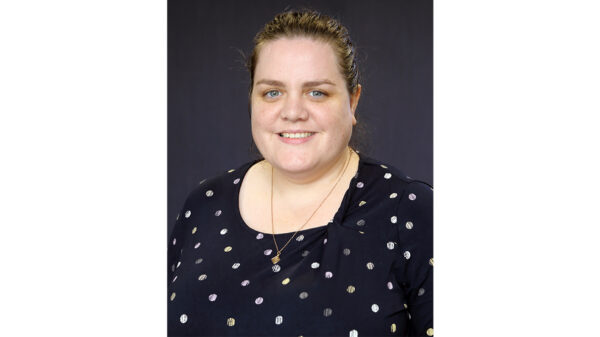
John Merry, Head of Employment at Lanyon Bowdler, said the new guidelines should help businesses work their way through the process to claim back up to 80% of the pay of employees who were being furloughed.
He said: “The government published updated guidance on its ‘furlough scheme’ on April 4, and we immediately updated the information available to employers on the Lanyon Bowdler website.
“We have also issued an email to the clients and contacts on our mailing list to give them a clear understanding of what this latest information means for them.
“It has now been made expressly clear that employees can start a new job when on furlough without jeopardising funding under the scheme.
“An employer can reclaim 80% of not just salary or wages, but any ‘regular payments’ that they are obliged to pay employees, including overtime payments, ‘fees’ and compulsory commission payments – up to the cap of £2,500 per month.
Although not given as a listed example, this must surely include car allowance.
“Whilst payments for private fuel under a fuel allowance by means of a card or account directly by the employer to the supplier will be excluded (as they will not be payments to the employee), arguably where the employee pays for private fuel and is then reimbursed by the employer, these payments will fall within the scheme.
“Expressly excluded from scheme funding are discretionary bonus (including tips) and commission payments and ‘non-cash payments’, so non-monetary benefits, such as cars or life or medical insurance, are not included.
“It has been made expressly clear that salaried company directors, including of personal service companies, can be furloughed under the scheme.
“A board resolution must be passed to effect this, and it must be noted in the company records. Furloughed directors can still perform their statutory duties, provided they do no more than would reasonably be judged necessary for that purpose, for example they should not do work of a kind they would carry out in normal circumstances to generate commercial revenue or provide services to or on behalf of their company.
“It has been confirmed that employees can be furloughed multiple times, i.e. they can be furloughed, brought back to work, then furloughed again – subject to funding being available only for any furlough period which lasts for at least three weeks.
“It is newly stipulated that employers must not only notify employees of their furlough status, but that they must do so in writing and keep the record of that written notification for five years.”
More information has also been provided regarding the changes to statutory sick pay (SSP) regulations in the light of the coronavirus outbreak.
John said: “With little publicity, new regulations came into force on March 28 which enabled the law to catch up with some of the changes promised by the government to the rules relating to statutory sick pay.
“It has already been announced that entitlement to SSP would start from the first day of absence, rather than only after three waiting days, and that businesses with fewer than 250 employees would be able to reclaim from the state SSP paid to any employee for up to 14 days in connection with coronavirus.
“It was also announced that employees who cannot work because they have self-isolated in accordance with government guidance, and who otherwise qualify for it, would be entitled to SSP – notwithstanding that they might not actually be unfit to work.
“Before March 28, the first two changes had not been implemented and, despite the government and Acas guidance suggesting otherwise, the third had only been partially implemented.
“So where are we now? Employees who commenced, or commence, a period of incapacity for work related to coronavirus on or after 13 March are entitled to SSP from the first day of absence provided that they miss at least four consecutive days of work.
“Obviously, a period of incapacity for work will relate to the virus if an employee is rendered unfit to work due to infection. Further, an employee will be deemed to be incapacitated if they are self-isolating for seven days due to suffering symptoms of coronavirus, or for 14 days because a member of their household has done so.
“A mechanism for employers to recover up to two weeks of SSP paid to employees affected by coronavirus has still not been set up, but we now know that when this is done, this will apply to SSP payable from 14 March onwards.”
For more information, visit www.lblaw.co.uk and click the link to read the latest coronavirus updates.