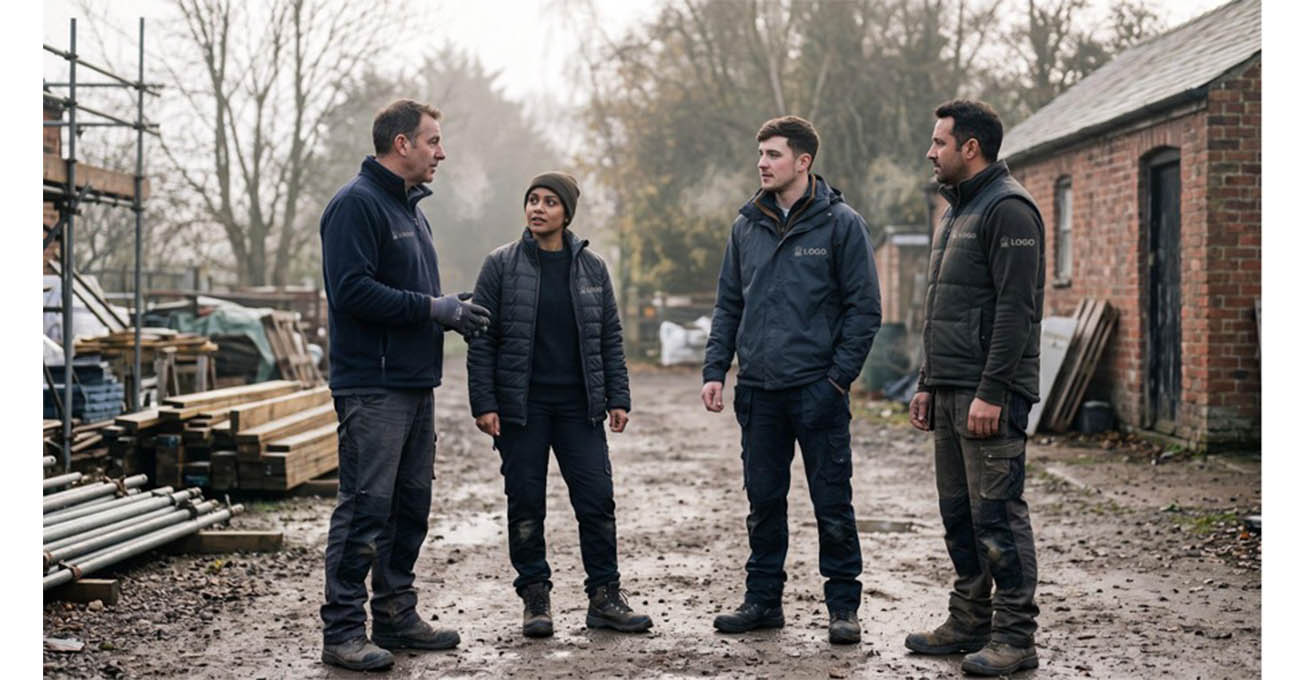
Few things slow a team down like being cold and wet all day. Autumn rain and winter mornings make short work of thin, worn-out kit. The answer is not one expensive coat, but layers that work together.
Build from a proper workwear range and your team stays warm, dry and productive through the colder months.
Why layering workwear beats one big winter coat
Layering keeps a team warmer and more comfortable than a single heavy coat. It traps warm air in separate layers and lets people adjust as the day changes. It also manages sweat, which is the hidden enemy in cold weather, because damp clothing pulls heat away fast. The system has three parts: a base layer, a mid layer and an outer layer.
Start with a thermal base layer
The base layer sits against the skin and sets up everything else. Its job is to move sweat away from the body, not to add bulk. Cotton is the common mistake here, because it soaks up sweat and holds it. Wet cotton then chills the wearer the moment they stop moving.
A proper wicking fabric pulls moisture outward and dries quickly. A good thermal base layer adds warmth without weight for cold outdoor work. This is the foundation, so a weak one undermines every layer above it.
Add a mid layer: work fleece, gilet or hoodie
The mid layer is where most of your warmth comes from. A work fleece is the classic choice, because it is warm, light and quick to dry. A work gilet or body-warmer heats the core while leaving the arms free. A fleece lined hoodie or heavyweight work sweatshirt suits milder autumn days.
This is the layer workers adjust most across a shift. A zip-up fleece jacket is ideal, as it comes on and off in seconds. Keep a mix available so the team can match warmth to the task, because a picker and a driver rarely need the same thing.
Choose workwear jackets that take the weather
The outer layer, or shell, is your team’s defence against wind and rain. Its job is to block the weather while letting sweat escape. A waterproof work jacket keeps out heavy rain and is vital for exposed sites. Softshell jackets handle wind and light showers while keeping people mobile.
The right shell depends on how wet and cold the work really gets. A padded work jacket or insulated work jacket adds serious warmth for static tasks, while heavier workwear coats suit long outdoor shifts in deep winter. A breathable set of workwear jackets for autumn and winter covers most teams through the season.
Hi-vis teams need the same thinking applied to their outer layer. A hi-vis waterproof jacket or hi-vis winter jacket keeps people both seen and dry. A hi-vis bomber jacket is a popular middle option for colder, drier days. Keep the high-visibility layer outermost, or a coat hides the very thing meant to keep people seen.
Don’t overlook work trousers
Work trousers are the layer most teams forget when the weather turns. People upgrade their jackets every autumn and keep the same thin trousers. Waterproof work trousers are essential for anyone working through rain. Thermal work trousers and lined work trousers add warmth for cold, dry days, while winter work trousers in a heavier fabric suit full outdoor shifts.
Gloves, hats and boots: don’t forget the extremities
Warm layers mean little if the hands, head and feet are cold. Thermal work gloves keep hands working, while waterproof work gloves suit wet handling tasks. A work beanie and a neck warmer trap heat that escapes through the head and collar. Thermal work socks, waterproof safety boots and insulated work boots keep feet warm on cold, wet ground.
Workwear bundles: kitting out a team for less
Dressing one person for the cold is simple, but a whole team adds up. This is where workwear bundles make sense for most businesses. Bundles group the layers people actually need, such as fleeces, thermals, trousers and jackets. Buying them together is usually cheaper than picking up each garment separately.
It also keeps the team consistent, which matters once you add branding. Everyone gets the same layers in the same colours, so new starters are easy to match. Looking at workwear bundle deals is a practical way to kit out a team in one go. It saves time as well as money when the weather turns.
Personalised workwear for a consistent team look
Cold-weather kit is also a chance to get your whole team looking the part. Branded layers turn practical clothing into a walking advertisement. A logo on a fleece or jacket builds a professional, recognisable team and helps staff feel part of something.
Branding is usually added by embroidery or print, and each suits different needs. Embroidery is hard-wearing and smart, while print handles detailed or colourful designs. Ranges like Uneek workwear are a popular starting point for teams looking for personalised kit.
A quick check before the cold sets in
A little planning now saves a cold, scrambled team later. Look at what each person already has, and where the gaps are. Confirm everyone has a working base, mid and outer layer, then check trousers, gloves, hats and boots.
Then order early, because good suppliers still need time to produce branded kit. Leaving it until the first frost risks a cold team and a rushed order. Get the layers right once, and your team stays comfortable from autumn to spring.