
A Derby training provider judged one of the best in the country by Ofsted has reported a strong year of results for apprentices with additional needs.
Andy Hallam, apprenticeship manager at Nine Dots Development, said the whole team was extremely proud of the company’s latest set of results which have seen an apprenticeship qualification achievement rate (QAR) of just under 80% for its learners with additional needs.
According to the latest available figures, the national apprenticeship achievement rate is 65.4% for all learners.
Pass rates for apprentices with additional learning needs and disabilities has in the past been far lower over the UK with only 57% achieving a successful outcome in 2023/4.
Nine Dots Development was this year judged by Ofsted as ‘Strong’ in every area, making it in the top few per cent of training providers in the country. The company was inspected under Ofsted’s new framework which provides an assessment in five different areas including inclusion.
It is currently training just over 300 learners aged 16 and above who are undertaking a range of apprenticeships in businesses around the country.
Andy said that Nine Dots is always fully committed to helping all learners achieve their best with carefully considered bespoke support provided to those who have an identified additional need.
Learners enrolled on an apprenticeship provided by Nine Dots have a range of needs including visual and hearing impairment, dyslexia, Attention Deficit Hyperactivity Disorder (ADHD), dyspraxia, autism, diabetes, epilepsy and Multiple Sclerosis.
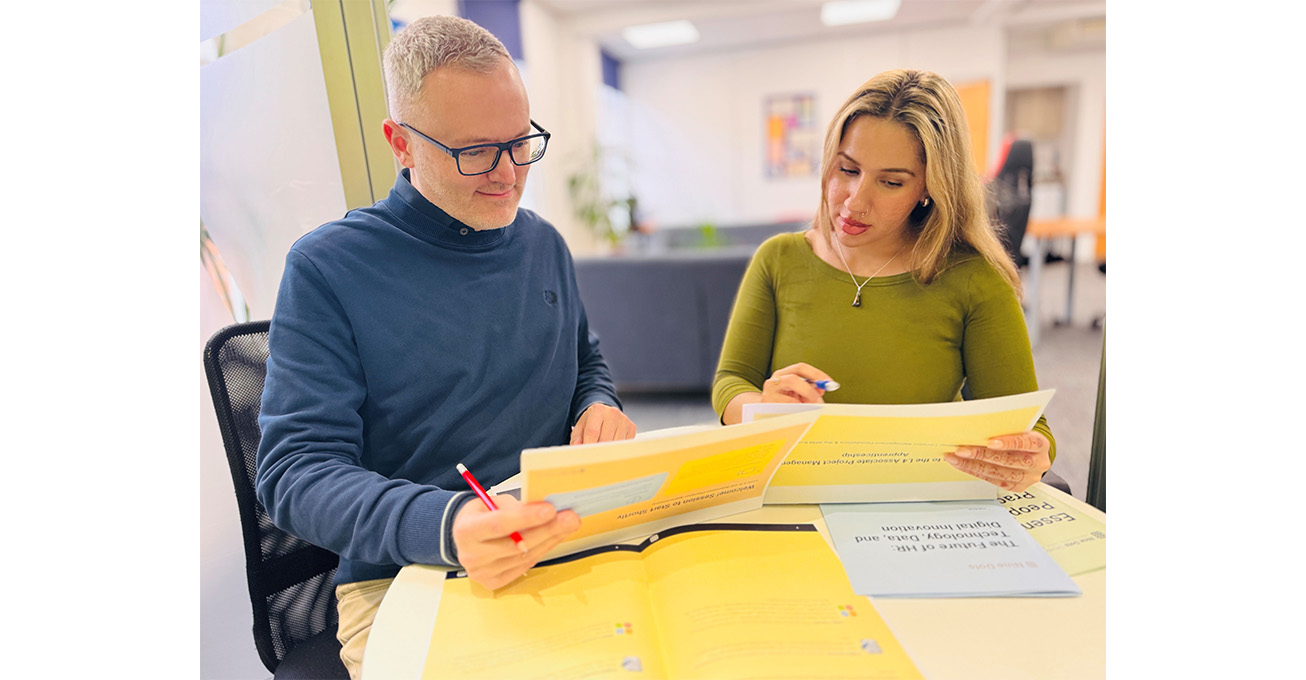
Additional support provided by Nine Dots has included providing training materials printed in a larger font; varying font colours and using a range of different coloured paper. Many people with dyslexia, for example, find reading materials printed on tinted paper can help them manage the visual stress that often accompanies the condition.
Fidget toys have been provided for learners with ADHD, and additional one to one sessions have been put on for some autistic apprentices to help create a supportive, structured learning environment. Extra time has also been allowed for some learners.
Andy said: “Our robust and proactive inclusion support processes are designed to identify and remove barriers to learning, reduce stigma and ensure every learner has the opportunity to succeed. We go above and beyond for all our learners to make it fair for everyone.
“Having a barrier shouldn’t stop people achieving. We don’t treat everyone as a one size fits all approach.
“Before people start we do a deep dive and ask them to tell us what they need. We then have a support plan in place and we check back on it regularly to ensure it’s all working as it should – including, sometimes, removing support if it is no longer needed.
“It’s just making things fair. When you get into a car, you might adjust the seat – that’s an example of a reasonable adjustment. The support we provide doesn’t give people an advantage, it just gives them a fair playing field to be able to do their best. For us, inclusion isn’t just about putting support in place, it’s about making sure that support translates into real achievement, confidence and opportunities for every learner.
“Our team is made up of people who all live and breathe inclusion, everyone is really passionate about it. We arrange extra training to keep people upskilled and make sure we keep things up to date.”
Ofsted inspectors who visited Nine Dots this year were effusive in their praise for the company’s inclusive practices.
Their report said: “Leaders are firmly committed to providing the best support strategies for their apprentices to enable them to succeed. Leaders and coaches consistently and skilfully use very well-established approaches to identify and understand swiftly apprentices’ support needs and any barriers to learning that apprentices face. Coaches use this understanding to plan suitable adaptations and support strategies effectively and to put these in place quickly.
“Leaders and coaches use a systematic and thorough approach to reviewing the effectiveness of support. This is revised or reduced for any apprentices who are ready to work more independently.”