

The construction industry is a major factor in the status of the UK economy. It represents huge business, and back in July 2019 the government announced a deal that promised to spend £600 billion over the next 10 years on housing, transport and other projects.
As it plays such a central role in the infrastructure of the country, the sector is heavily regulated, with a raft of industry standards. The Building Regulations 2010 set these out and it is up to construction firms to adhere to these to the letter.
These businesses should also be covered by a robust builders’ insurance policy, to protect themselves in the event that things do go wrong.
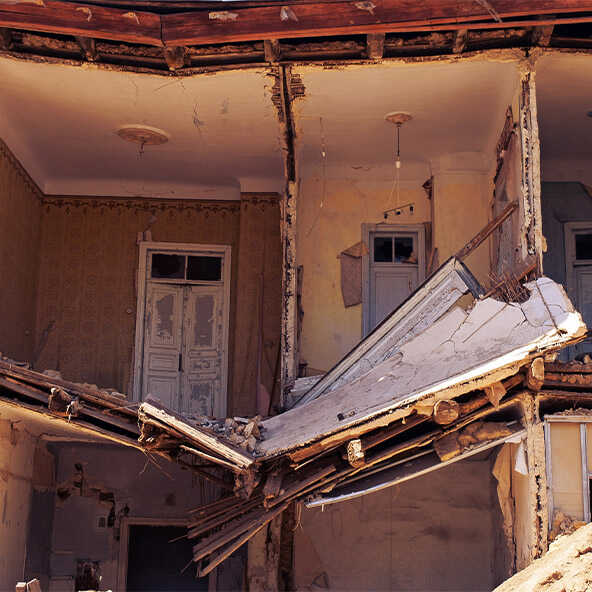
There have been recent examples of building collapses in central London, for example, but what are some common causes of these incidents? Read on to find out more.
Poor quality materials
Premium materials come at premium prices, which is why there might be a tendency to use those that come with a smaller price tag, as it means firms can increase their profit margins. However, the trade-off for using low-cost materials is that they might not be fit for purpose and this can cause serious problems in the safe construction of any building.
Worker error
Technological advances mean building projects can progress much faster in the modern era, but there is still a strong human element involved. And as long as that remains the case, there is always a chance that mistakes will be made during the construction process. Nobody means to make them, of course, but they do happen and the consequences can be severe.
Weak foundations
The foundations are arguably the most important part of any project. They’re the base upon which the rest of the building sits, which means they tend to be the costliest aspect. It can take a lot of time and money to dig down and create solid foundations, so if corners are cut or mistakes are made, the building could soon begin to give way.
Lack of testing
Any building should undergo strength testing at various points, to make sure it is meeting industry standards and will be able to withstand the load once it is in use. However, if these assessments are not done, any potential faults or defects may not be spotted and the building may not be able cope.
Unexpected loads
Another problem is if the building is no longer used for what it was designed for in the first place. For example, if it begins to come under much heavier loads then it may be unable to bear those and could collapse as a result.