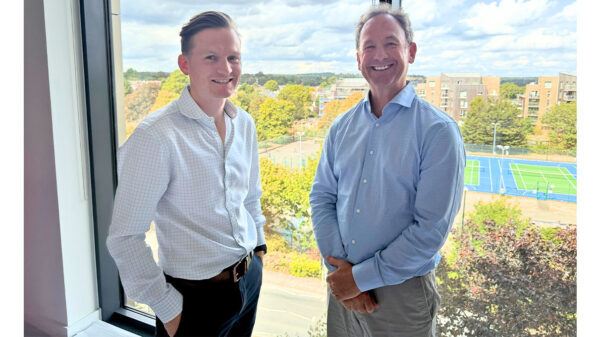

Last week, Adam Hodson, Clinicial Negligence Specialist at Sydney Mitchell LLP had a difficult conversation with a prospective new client which, sadly, will likely be the first of many more to come whilst the country and the world is gripped by the coronavirus pandemic.
Mr Smith (not his real name) was calling on behalf of his family member who had been diagnosed with Covid-19 and who had been admitted into hospital with a fever, persistent cough and shortness of breath. The patient was being cared for on an isolation ward along with other patients suffering with symptoms of the virus. His shortness of breath became worse and he was diagnosed as suffering from pneumonia – a complication of the virus attacking the lungs and airway – and he was commenced on intravenous antibiotics to try and stem the tide. Unfortunately, his body did not respond to treatment and his breathing deteriorated, such that he was told that he needed to be transferred to the Intensive Care Unit (ICU) to receive specialist care and to be put onto a ventilator. However, within a matter of hours, a decision was made that the patient did not meet the criteria for ICU and ventilation treatment – he was over 75 years old and had numerous underlying co-morbidities such as heart failure and diabetes – and there was another younger patient who needed the same treatment. Instead, he was to remain on the ward, with the staff doing their best to manage his symptoms. However, with his body not responding to treatment, sadly, it meant that he was going to die.
Naturally, Mr Smith was upset and distraught by the decision of the treating clinicians – how could they “write off” a patient in this way? How could it be in the patient’s best interests to be denied treatment which would save his life, and be given what effectively is a death sentence and be left to die on a hospital ward? Surely this was medical negligence? Surely it is illegal for the clinicians to do this? Mr Smith therefore sought advice and wanted to know what his options were.
To successfully pursue a clinical negligence claim, a person has to jump over two hurdles – firstly, that the treatment complained of is so unreasonable that no reasonable body of similar clinicians would have given the same treatment; and that as a consequences of that unreasonable treatment, some harm has been suffered. This is the legal test which is found in the case of Bolam v Friern Hospital Management Committee [1957] 2 All ER 118 and is referred to as the “Bolam Test”. Critically, simply because another doctor may have done something differently does not mean that the treatment given was unreasonable if it can be reasonably and rationally explained.
In Mr Smith’s case, it is undeniable that the harm caused – death – is as a result of the decision made by the clinicians to prioritise another patient and to refuse to treat the original patient on ICU on a ventilator. But the question is: is that decision is so unreasonable that no other body of reasonable clinicians would make the same decision?
Earlier last week, the British Medical Association (“BMA”) issued new guidelines to its members – https://www.bma.org.uk/media/2226/bma-covid-19-ethics-guidance.pdf – as a direct response to the situation facing the NHS caused by Covid-19. It is well known that the NHS is stretched, and that the rising numbers of patients suffering from Covid-19 has the very real potential to cause the system to be overwhelmed. As a result, difficult legal and ethical decisions need to be made by clinicians on the front line as to which patients will benefit from finite and sparse resources and those that, sadly, have a poor prognosis.
The BMA has confirmed in its guidance that, “…it is both lawful and ethical for a doctor, following appropriate prioritisation policies, to refuse someone potentially life-saving treatment where someone else has a higher priority for the available treatment…” The guidance provides a helpful framework and lists what factors must be taken into account when making these type of decisions. Crucially, the BMA confirm that communication with the patient and their family is paramount, and, , “…Where a decision is made to withhold or withdraw some forms of treatment from patients on the grounds of resource allocation, it is crucial that those patients still receive compassionate and dedicated medical care and attention, as far as possible in the circumstances. This should include appropriate symptom management and, where patients are dying, the best available end-of-life care…”
Does this therefore mean that a doctor who decides to prioritise treatment – such that one person is denied treatment and will inevitably die as a result so that another has the chance of life – is so wrong in law that it is negligent? Ultimately, the decision-making process will need to be carefully documented and explained so that it stands up to scrutiny by a reasonable body of clinicians. However, where there are limited resources available, it is inevitable that not everyone will receive the treatment that they should under “normal” circumstances. When considering at the Bolam Test in light of the BMA’s guidance, it is hard to see how such a decision can be deemed to be negligent where the BMA has issued guidance to its doctors, and where that advice is being followed across the country by hard-working and dedicated clinicians who are trying their best to treat and save patients in desperately difficult circumstances.
It is hard not to have the utmost sympathy for Mr Smith, and for increasingly countless others in his shoes, who face the prospect of losing their loved ones. But similarly, it is difficult to not have the utmost sympathy and respect for the clinicians on the front line for whom these types of decisions are now being made in hospitals across the nation on a daily basis, and who must try and balance their legal and ethical judgments against the Hippocratic Oath – to treat the sick to their best of their ability.
For help or advice on this or other clinical negligence matter, please speak to Adam Hodson on 0808 166 5638 (0808 166 8827) a.hodson@sydneymitchell.co.uk or a member of the Sydney Mitchell Personal Injury Team.