
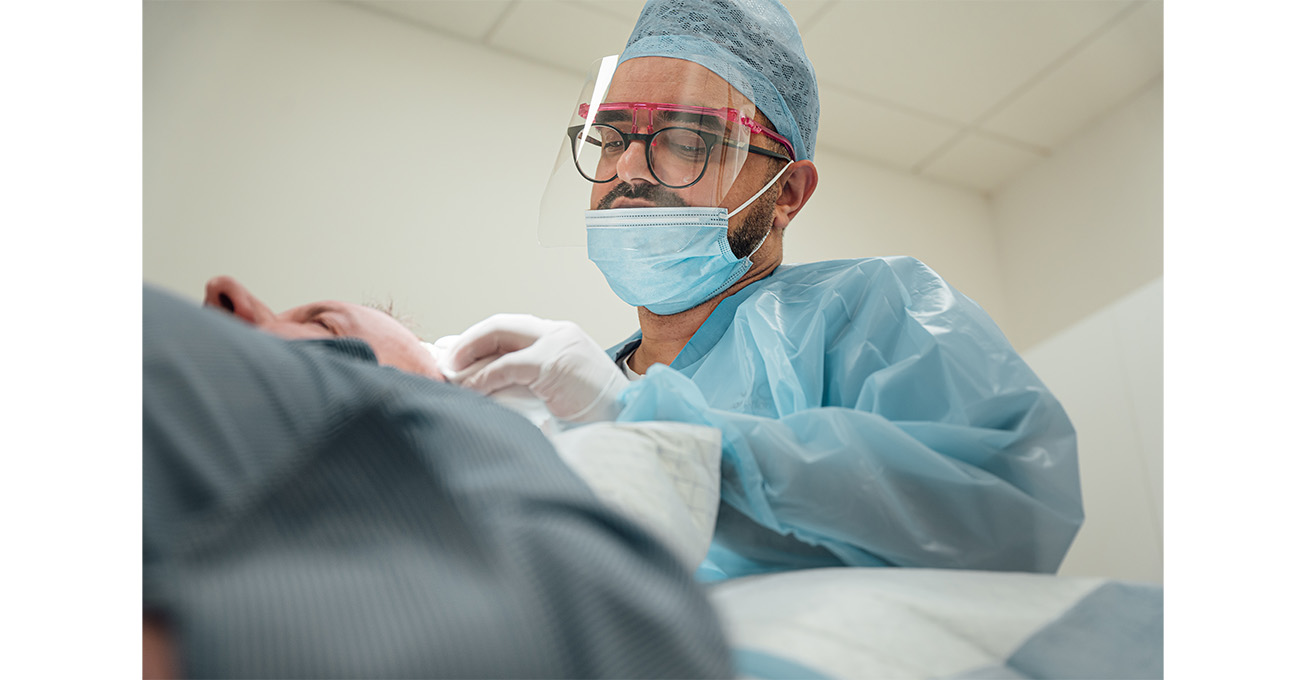
Leading UK hair restoration surgeon Dr Matee Rajput is urging patients to put safety before price when choosing a hair transplant clinic, revealing that he regularly performs corrective surgery on patients left with poor results from previous procedures.
With more than 16 years’ experience in medicine, Dr Rajput has built a reputation treating household-name celebrities, Premier League footballers, elite athletes and everyday patients. But alongside his high-profile work, the Surgical Director of private clinics across the UK and Ireland regularly sees patients seeking help after unsuccessful hair transplants.
His warning comes amid renewed scrutiny of safety standards within the hair restoration industry, following a recent ITV investigation into practitioner qualifications and surgical oversight.
“Some of the most difficult cases I see are patients who have already undergone a hair transplant elsewhere and are now seeking corrective surgery,” says Dr Rajput. “Many were struggling with their hair loss in the first place, so when a procedure goes wrong, the impact on their confidence can be particularly distressing.”
Poorly performed hair transplants can leave patients with unnatural hairlines, visible scarring, depleted donor areas and disappointing hair growth. Corrective surgery can be more complex because previous procedures may have reduced the amount of healthy donor hair available.
Dr Rajput believes the increasing commercialisation of hair restoration makes it especially important for patients to look beyond discounted prices and social media promotions.
“A hair transplant is surgery, not simply a cosmetic purchase,” says Dr Rajput. “Patients should never choose a clinic based purely on price or social media advertising. The qualifications of the person performing the procedure and the quality of the aftercare should always come first.”
He advises anyone considering surgery to ask three essential questions:
Who will actually perform my procedure? Patients should understand who is responsible for each stage of surgery and their qualifications.
Am I genuinely a suitable candidate? A thorough consultation should assess the cause of hair loss, donor hair availability and realistic long-term expectations.
What happens if something goes wrong? Patients should understand the risks, aftercare arrangements and options if they experience complications.
Dr Rajput, who has also undergone a hair transplant himself, understands the experience from both a surgeon’s and a patient’s perspective. He stresses that responsible medical care sometimes means advising against surgery altogether.
“One of the most important parts of my job is knowing when not to operate. The right decision might be to delay treatment, investigate the cause of hair loss or explore other options first. The patient’s long-term wellbeing must always come first.”
Having witnessed the consequences of unsuccessful procedures, Dr Rajput hopes greater awareness will encourage people to research their options carefully before committing to surgery.
“For someone who has already struggled with the emotional impact of hair loss, an unsuccessful transplant can make an incredibly difficult situation even worse. Patients deserve honest advice and the highest possible standards of care from the outset.”
For more information, visit www.drmatee.com.