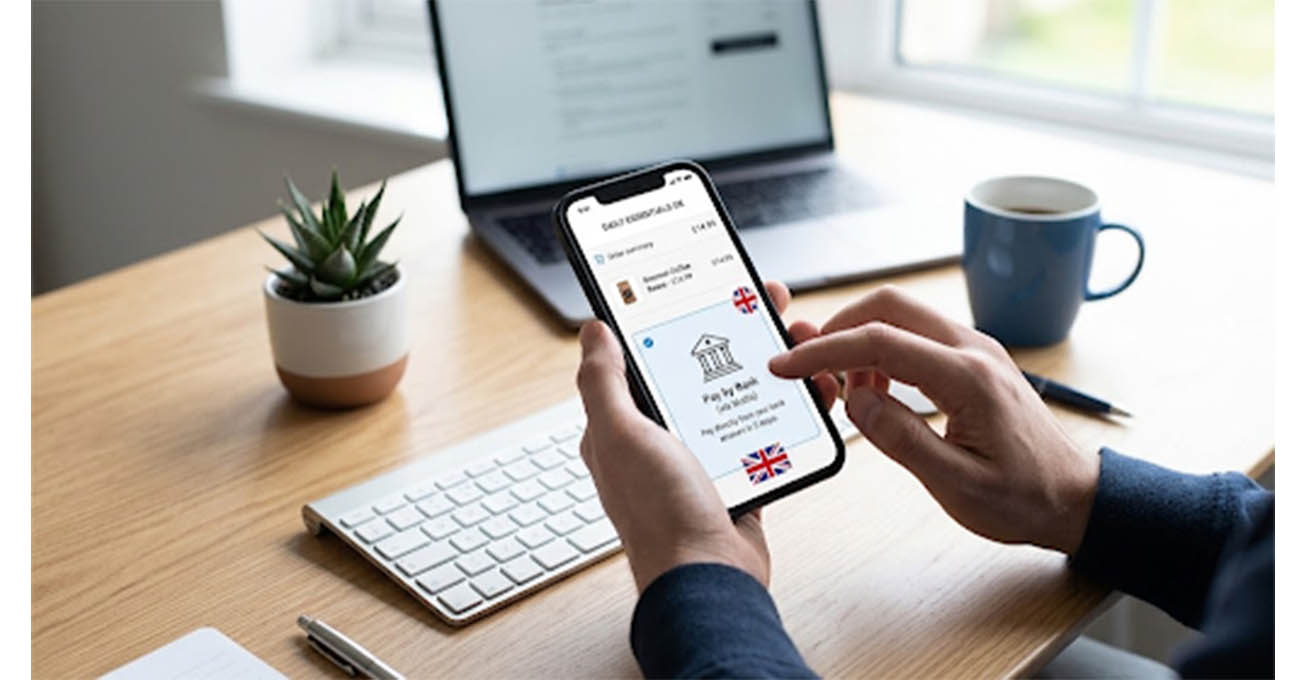
Mollie has launched Pay by Bank in the UK, letting customers pay straight from their bank account inside a business’s own checkout, with no separate app or brand in the way.
Built on the Open Banking connections of GoCardless, which Mollie bought earlier this year, it covers one-off payments, recurring payments and invoices. Bank payments have mostly been something large retailers offered, and this puts them inside the checkouts ordinary online businesses already run.
Mollie says its payments complete in three steps, against the five it describes as typical of other Open Banking set-ups, and it connects to more than 2,500 banks. It has also published a page showing how reliably each bank performs. Fewer steps and dependable banks are exactly what decide whether a customer finishes paying or gives up halfway.
Fewer Steps Change How Customers Pay
The biggest names moved first. Amazon and eBay both added Pay by Bank in the UK in February, letting buyers approve purchases in their banking app without typing in card details. eBay’s version runs through TrueLayer, and buyers’ bank login details never reach the retailer, which removes one of the main worries about paying online.
Not every sector waited for the big retailers. Online gaming and betting brands were early to bank payments, listing Trustly and Open Banking beside Visa, PayPal and Apple Pay at the cashier, because their customers move money in and out of accounts far more often than a typical shopper. That frequency pushed them to make bank payments quick and dependable well before most businesses had to think about it.
The way sign-ups now work when casino gaming on a mobile shows where this leads. Apple Pay, Google Pay and Open Banking can confirm who a player is and link their bank account in a single step, so registration and the first deposit happen together instead of through two separate forms. For a small business, the same approach means a new customer can be verified and paid in one go rather than typing their details in twice.
One Billion Payments and Rising
Bank payments now have real scale behind them. Open Banking Limited reported in July that more than one billion payments and 100 billion API calls had gone through the CMA9, the nine largest UK banks and building societies, since Open Banking launched over eight years ago. June alone saw a record 2.81 billion API calls and 40.16 million payments.
Recurring payments are where the growth is strongest. Sweeping variable recurring payments, which move money between a customer’s own accounts, rose 6.7% in June to 7.73 million, and a new industry scheme, the UK Payments Initiative, now covers recurring bank payments to utilities, charities and government bodies, with subscriptions and wider e-commerce next. For a gym, a cleaning firm or a software provider, that points towards collecting regular income without chasing invoices.
Identity Checks Are Part of the Checkout
Every payment starts with knowing who the customer is. Mobile casino and gaming apps lean on Face ID and Touch ID for quick sign-in, banks handle verification inside their own apps, and smaller firms are working through the digital identity challenge for modern businesses with fewer resources. Bank-led payments help on that front, because the customer approves the payment in an app where their bank has already confirmed who they are.
Reliability Is the Real Test
Speed means little if the connection fails. In June, Open Banking recorded an average response time of 349 milliseconds, 50 milliseconds faster than the previous period, with weighted availability of 99.80%. Mollie publishing bank-by-bank performance data shows the industry knows reliability is what will win over businesses still relying on cards.
For small business owners, the practical route is to start with the payment methods customers ask for most and test each one on a phone. Whether the customer is joining a gym, paying a cleaner, buying from an online shop or topping up a casino account, the same rule applies: the fewer steps between choosing and paying, the more customers finish. With Pay by Bank now inside everyday checkouts, smaller firms have a realistic way to offer it.