No, most softshell jackets are not waterproof. The typical softshell is water-resistant, which means they shrug off drizzle and light rain for a while. Steady rain will eventually work through the fabric and the seams. That distinction matters a great deal when you are buying autumn workwear for a whole team.
Outdoor-gear articles cover softshells for hillwalkers and weekend cyclists. They rarely help the person choosing forty jackets for drivers, fitters and site staff. For most working roles, a softshell is the best everyday autumn jacket you can buy. This guide explains why, and shows where a different workwear coat earns its place. It also covers reading labels properly and keeping the cost per wear down.
Are softshell jackets waterproof? The short answer
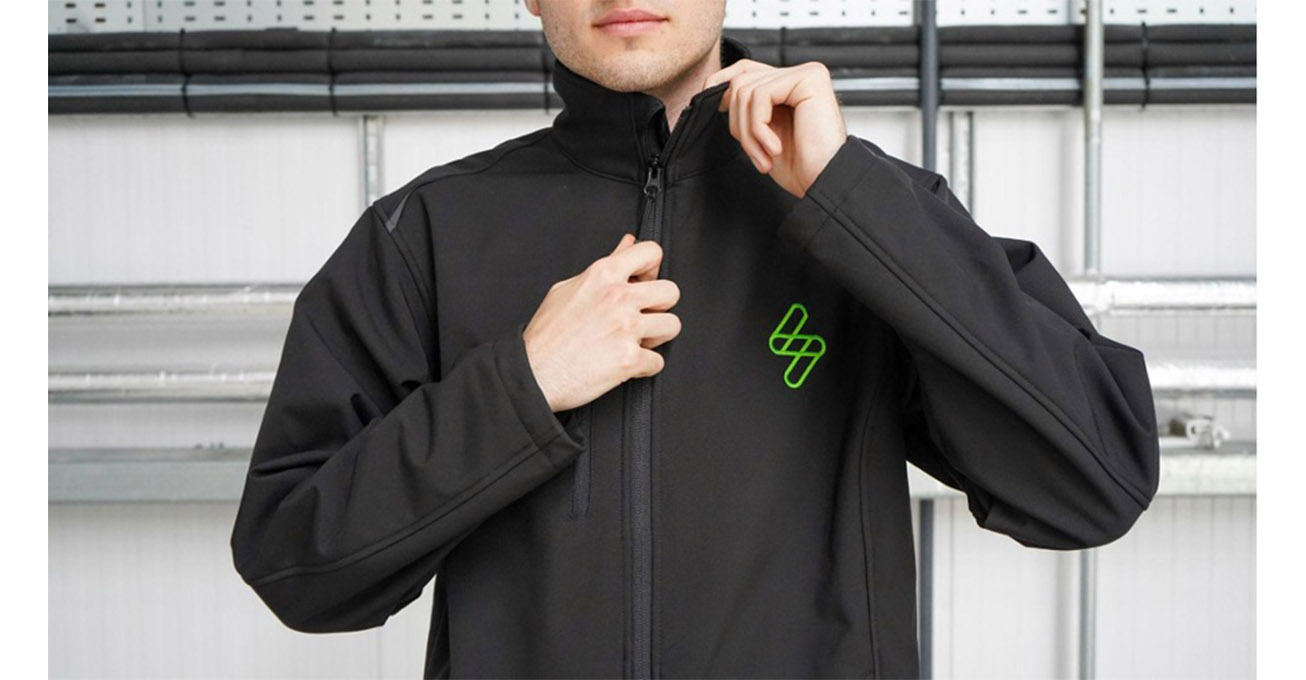
A standard softshell is water-resistant, not waterproof. The fabric is tightly woven and finished with a durable water repellent coating, known as DWR. Rain beads on the surface and rolls off, at least while that coating is fresh. Under steady rain, water finds its way through the weave and the stitching.
A waterproof jacket is built differently. It uses a membrane or coating that blocks water completely, and its seams are usually taped or sealed. The main zip is covered or sealed as well. Most softshells have neither the membrane nor the taped seams, which is why the general rule holds. The exceptions are the bonded, membrane-lined softshells covered below.
For most team buyers, this is good news rather than bad. Very few people stand still in the rain for a full shift. Most move between vehicles, sites and buildings, and a softshell suits that pattern far better than a heavy waterproof. Keep a waterproof coat in reserve for the genuinely exposed roles, and let the softshell do the daily work.
What water-resistant actually means
Water-resistant describes fabric that holds off water for a limited time and a limited amount. The term is used loosely across the clothing industry, so treat it as a description rather than a promise. The DWR finish does most of the work on a softshell. It sits on the outer face and wears away with use, abrasion and washing.
When the coating fades, the fabric wets out. It feels cold and heavy even before water has come through to the lining. That is why a six-month-old softshell often seems far less rain-proof than it did on day one. The fabric has not failed; the finish has simply worn thin.
Some softshells add a laminated membrane between the outer fabric and the fleece lining. These offer far better wind and water resistance, and the best of them are sold as a waterproof softshell jacket with good reason. The next section explains what separates a real one from a label.
Do waterproof softshell jackets exist?
Yes. The better workwear softshells now go well beyond a simple water-repellent finish. They bond a waterproof, breathable membrane into the fabric and add waterproof zips, so the jacket keeps out far more than a shower. These are a different class of garment from the basic softshells most people picture, and the product name alone will not tell you which one you are looking at.
The quickest way to tell is to ask for the waterproof rating, given in millimetres on the specification sheet. The higher the number, the more rain the fabric holds back. A rating of 10,000 mm is comfortably waterproof for a working day in British rain. If a supplier cannot give you a rating at all, treat the waterproof claim as marketing rather than fact.
Brands such as Uneek workwear makes a premium softshell built exactly this way, with a 10,000 mm rating and waterproof zips. Jackets like this are widely stocked as branded team wear, so a full size run is easy to source. The one thing still worth asking about is whether the seams are taped. That matters for staff who face all-day rain; for most roles, the fabric rating is what counts.
Many buyers search for a waterproof softshell jacket for men, hoping one garment will cover every situation. A bonded membrane softshell gets closer to that than most people expect. It handles the vast majority of autumn days on its own. For the handful of roles that face all-day rain, a packable waterproof shell over the top is cheap insurance.
Which jacket suits which role?
Start with a softshell as the core jacket, then add a second layer only where the exposure justifies it. This is the step most bulk orders skip, and it is where money gets wasted. Buying heavy waterproofs for everyone leaves most staff hot, sweaty and reaching for something else.
| Role | Typical exposure | Recommended workwear jacket |
| Drivers and delivery staff | Short bursts between vehicle and doorstep | Softshell every day, with a lightweight waterproof jacket in the cab |
| Fitters and installers | In and out of buildings all day | Softshell, ideally with stretch panels for reaching and kneeling |
| Office and showroom staff | Commute and occasional site visits | Softshell as the smart branded layer |
| Site managers and surveyors | Hours outdoors, often standing still | Softshell as the mid layer under a waterproof shell |
| Grounds, highways and utilities | Full shifts outdoors in all weather | Hi-vis waterproof jacket or parka, with a softshell or fleece underneath |
Softshells win the everyday roles because people actually keep them on. The fabric stretches, breathes and does not rustle, and it looks smart enough for a customer’s doorstep. A waterproof shell traps sweat unless it is highly breathable, and breathable waterproofs cost considerably more. Even for the exposed roles, the softshell earns its place as the warm, branded layer underneath.
Anyone working near moving traffic or plant may need certified hi-vis rather than a standard jacket. Check the relevant standard for your sector before you order, because a branded softshell does not replace mandatory PPE. Where hi-vis is required, many workwear ranges offer softshells and waterproofs in certified versions. That lets you keep the branding consistent without compromising on safety.
Other workwear coats worth pairing with a softshell
A softshell covers most of the year, but a few other workwear coat types fill the gaps. Knowing what each one does well stops you buying the wrong thing for the wrong role. Most workwear brands make all of these in matching colours, so the team still looks like one team.
- Waterproof work jacket. A membrane, taped seams and a hood. Proper waterproof work jackets are the right answer for anyone who stands in the rain, and a sensible spare for van cabs. Choose a breathable one if it will be worn for hours.
- Hi-vis waterproof jacket or parka. Certified high-visibility fabric with a waterproof shell and, in the parka, insulation. The outer layer for highways, grounds and yard staff through the darkest, wettest months.
- Fleece jacket. Warm, cheap to brand and quick to dry, but with no wind or water resistance. A good mid layer under a waterproof, or a workshop jacket where the weather never reaches.
- Bodywarmer or gilet. Core warmth with free arms, popular with fitters and warehouse staff. Works well over a softshell on colder mornings.
- Bomber jacket. A shorter, warmer cut with a windproof shell. A traditional site favourite for cold, dry days, though less versatile than a softshell in changeable weather.
For a mixed team, the usual pattern is a softshell for everyone plus waterproofs for the exposed roles. That keeps the order simple, the branding consistent and the budget under control. Spending on a heavy coat for someone who spends the day in a van is money that could have gone on a better softshell.
How to read labels when ordering in bulk
Product photos and headline names tell you very little, so ask for the specification sheet on every jacket you shortlist. Words like showerproof, weather-resistant and water-repellent all mean water-resistant to some degree, and none of them mean waterproof. Then order a sample before committing to the full team. Good suppliers have no minimum order, so a single jacket in the right size is easy to arrange. Wear it for a week of real work, wash it once and see how it behaves.
How washing affects performance and cost per wear
Workwear gets washed far more often than a weekend jacket. Every wash wears down the DWR finish and can flatten the fleece lining. Most softshells lose noticeable water resistance well before the fabric itself wears out. Frequent washing is therefore the biggest factor in how long a jacket stays useful.
Cost per wear is the number that should drive the decision. Divide the purchase price by the number of shifts the jacket survives in good condition. A cheaper softshell that wets out after twenty washes costs more per wear than a better one that lasts two seasons. Branding is a fixed cost on top, so a jacket replaced early wastes the embroidery as well. Buy on fabric weight, seam quality and wash performance, not on the headline price.
Branding softshells: embroidery or print?
Embroidery is the usual choice for softshell workwear. It looks professional, survives hundreds of washes and suits the fabric well. The one caution concerns membrane-lined jackets, where the stitching perforates the membrane behind the logo. Ask how the supplier protects that area, and keep the logo to the chest or sleeve where exposure is lowest.
Printing works too, and it suits detailed or multi-colour logos. Heat seal vinyl is a cut film pressed onto the garment at high temperature, and it copes with washing well. DTF, short for direct to film, prints the design onto a film that is then heat-pressed onto the jacket. It reproduces fine detail accurately across a wide range of fabrics. Stretchy softshell fabric can affect how any print adheres over time, so a good supplier will advise on the method rather than apply one to everything.
Insist on a proof before production. For embroidery, that means a photo of a stitched sample. For print, expect a PDF visual showing position, size and colours. A personalised workwear supplier who handles digitising, proofing and production in-house can turn this around quickly. They also take full responsibility for the result, because nothing leaves the building. Softshells are a familiar canvas for embroiderers, so decoration on them is well understood and rarely causes surprises.
Autumn workwear timing: order before the weather turns
Autumn workwear should be on shoulders before the first cold, wet week. Branded jackets take longer than plain stock. A realistic turnaround for embroidery or print is around seven to ten working days once the proof is approved, plus delivery. Add time for choosing samples and collecting sizes from the team.
Ordering in late September or early October usually gets ahead of the weather. Suppliers get busier as temperatures fall, so lead times stretch. Some offer next-day despatch on urgent orders, which helps if you have missed the window. It is cheaper and calmer to plan ahead.
Autumn is also a natural moment to review the whole kit. Pair softshells with a waterproof for the exposed roles, and add hi-vis versions where staff work near traffic. A consistent branded outer layer across every role makes the team visible, walking advertising through the wettest months of the year.
Quick answers for busy buyers
Can you wear a softshell jacket in the rain?
Yes. A basic softshell keeps you dry through a shower and dries quickly afterwards. A bonded, membrane-lined softshell with a proper waterproof rating will handle steady rain as well. Check the specification sheet so you know which one you are buying.
What is the difference between a softshell and a hardshell?
A hardshell is fully waterproof, with a membrane and taped seams. A softshell is stretchy, breathable and water-resistant, and far more comfortable for active work.
Are softshell jackets warm?
Most have a fleece backing and block wind well, so they are warm enough for autumn. For winter, add a base layer or choose a heavier softshell rather than expecting the jacket alone to cope.
Can softshell jackets be embroidered?
Yes, and embroidery is the most common way to brand them. Ask for a stitched proof first, and check how the supplier handles membrane-lined styles.
How long does a softshell stay water-resistant?
It depends on wash frequency and care. The repellent finish fades with every wash, so reproof it periodically and avoid fabric softener.
The bottom line
Softshells are water-resistant, not waterproof, and for most working roles that is exactly right. Make the softshell the core of the team’s autumn workwear, then add a waterproof or hi-vis coat only where the exposure demands it. Read the specification sheet rather than the product name, and buy on cost per wear. Insist on a proof, order samples first, and get the order in before the weather turns. Do that, and the team will be warm, dry enough and looking sharp long after the first storm has passed.