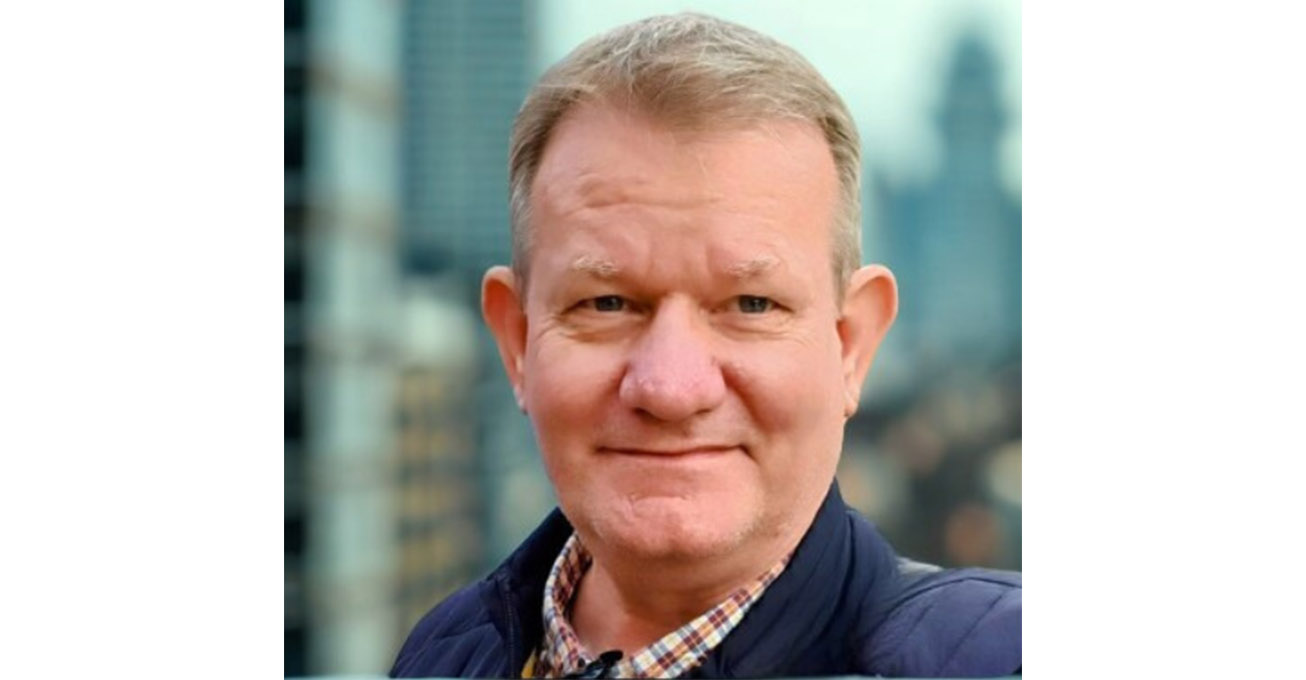
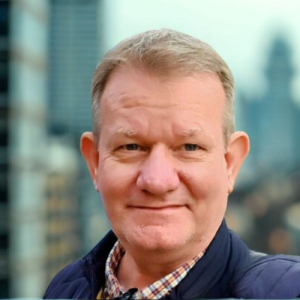
I’m Robert Streeter, CEO of TheAx. I’m driven by a clear belief that technology should not just support businesses, but it should actively shape their growth, direction, and long-term value. Today in an AI age creating an accelerated pace of change, this is even more important.
At TheAx, we focus on aligning strategy, leadership, and technology to help our customer’s organisations scale with intent, not just activity.
For me, the work we do at TheAX isn’t just about building a company – it’s about redefining how consultancy business operate, and how their client organisations approach transformation, moving from fragmented change to structured, adaptive, and strategic growth.
What does a typical day look like for you, and how do you prioritise your time?
In a small, growing business, there’s always a tension between building the company and running it. Anyone who has started a business from scratch will appreciate that.
A big part of my focus is on creating leverage – putting in place the structure, clarity, and systems that reduce dependency on me as the founder. That’s the goal. But the reality is in a small team, I still get pulled back into the core of the business – sales conversations, product decisions, key client work – because that’s where momentum is created.
So, a typical day is a constant balance between stepping back to work on the business and stepping in to do the work.
Despite that tension, I try to always ensure I spend time thinking about direction and how we scale effectively, but equally I’m still actively involved in driving revenue, shaping the product, and making decisions that move things forward. It’s a familiar phase for anyone who has built something from scratch – you’re trying to design yourself out of the business while still being one of its most critical operators.
What’s one misconception about your industry or role that you’d like to challenge?
There are two that stand out.
In consultancy, there’s a perception that it’s reserved for large organisations – expensive, theoretical, and not always delivering outcomes that justify the investment. That perception exists for a reason in parts of the industry, but it’s not how it should be.
Good consultancy should be practical, commercially grounded, and directly tied to measurable results. It should pay for itself.
On the technology side, there’s a belief that adopting new tools or platforms automatically creates progress. It doesn’t. Without alignment to an organisations strategy and real business context, technology often just adds complexity.
The intersection of the two is where the real issue sits for me – businesses investing in advice or technology without a clear, structured path to value.
What does success look like to you – and how has that evolved over time?
It’s changed quite significantly.
Early in my career, success was more linear – progression through roles, increased responsibility, hitting targets, and visible markers of growth. It was largely externally defined.
Now, it’s more about building something that is structurally sound and has longevity. It is more about legacy and impact now.
Success is creating a business that works – not just in terms of revenue, but in how it operates, how it scales, and the value it consistently delivers. For me it’s about working to create clarity, repeatability, and resilience rather than just growth for the sake of it.
What’s one initiative or achievement you’re particularly proud of – and why?
Being part of building something that challenges the traditional consultancy model in a meaningful way.
Not different for the sake of it, but different because the industry is undergoing rapid disruption and needs to evolve – particularly in the context of AI and how knowledge is created, accessed, and applied.
We’re working towards a model where expertise is not locked behind the availability of consultant hours, cost, or access barriers; but is structured, systemised & scalable, and continuously improving. That shift feels important, because it moves consultancy from something episodic and exclusive to something embedded and accessible to any business.
What legacy or impact are you aiming to create through your work?
At its core, it’s about growth and transformation – but the mechanism for that is knowledge.
I believe the future of consultancy is about democratising access to expert insight. Not in a generic way, but in a way that is deeply contextual – where systems understand how a specific business operates, the environment it’s in, and the challenges it faces.
From there, consultancy becomes far more powerful: combining human expertise and experience with intelligent systems that can interpret context, adapt in real time, and provide step-by-step guidance that evolves as the business does. But in ways that can still leverage the human touch for managing real-world change that systems can’t replace.
If that level of insight becomes accessible to any business – not just those that can afford traditional consultancy – then you fundamentally change how organisations grow and make decisions.
What’s the most valuable lesson you’ve learned in your leadership journey?
That misalignment of people is the root cause of most problems.
It’s easy to assume that challenges come down to execution – that things aren’t moving because people aren’t working hard enough or decisions aren’t being made quickly enough. In reality, the issue is usually a lack of clarity.
If people aren’t aligned on direction, priorities, or what success looks like, no amount of effort fixes that. In fact, it often amplifies the problem.
Leadership, in practice, is less about driving activity and more about creating clarity and building teams – because once they are in place, execution naturally follows.
How do you maintain focus and motivation during more challenging periods?
I focus on trying to stay anchored to what actually moves the business forward. Not on the noise and distractions that are ever present in running a business.
During more difficult periods, there’s a natural tendency to react – to get pulled into urgency or short-term pressure. The discipline is stepping back and asking what will genuinely change our position. The alternative leads to getting sucked into firefighting.
Being motivated to achieve a goal is of course important – but I don’t rely heavily on motivation as that can be inconsistent over time and unreliable. It’s more about consistency, perspective, and creating repeatable habits. If the direction is right, then progress — even incremental — compounds over time if you work in a repeatable way, and just keep doing it.
That approach removes a lot of the emotional volatility and keeps things grounded in execution.
What are you engaging with right now that’s influencing your approach to business or leadership?
I’m particularly focused on how AI is reshaping knowledge work and decision-making.
Not just in terms of automation, but in how it changes access to expertise, the speed at which businesses can operate, and what effective strategy looks like in practice.
Much of my thinking is centred on how you combine human judgement with systems that can process context at scale. That intersection is where the most meaningful shifts will happen – especially in areas like consultancy.
Which leader or entrepreneur has influenced you most, and what have you taken from them?
For me, it’s less about a single individual and more about patterns across effective leaders, and management thinkers and writers. I don’t think I could single out one individual as influences in different areas come from different people.
What stands out consistently from my top influencers though is their ability to combine strategic clarity with decisive execution. They don’t just have vision – they operationalise it.
That ability to bridge thinking and doing is something I’ve focused on developing.
What’s one piece of advice you’d give to someone at the start of their career?
Focus on how you think, not just what you do. And vice versa. Its about balance and creating good habits to balance how you work that can take you through both the highs and lows you will experience.
Skills and roles will change (and today in an AI world that happens quickly), but the ability to think clearly – to break down problems, understand systems, develop the ability to work with people, and make good decisions – is what compounds over time.
Also, avoid optimising too early for status or progression. Spend time understanding how things actually work, where value is created, and where your personal skills fit into this picture.
If you build that foundation, progression tends to follow naturally – and more sustainably.