 Stigma and misinformation around lung cancer is killing people, says Roy Castle Lung Cancer Foundation – with research showing that only one in 4 people in the UK are able to name a single symptom of the disease*.
The charity is releasing ‘15 truths about lung cancer in 2025’ during Lung Cancer Awareness Month (November) in a bid to educate people about a disease that results in the death of someone every 15 minutes in the UK**.
“Lots of people still think that if you don’t smoke, you won’t get lung cancer,” says Chief Exec Paula Chadwick. “This myth, along with others, is killing people by contributing to the stigmatizing of patients, delaying of diagnoses and obstruction of access to early care.
“Research by the Global Lung Cancer Coalition shows that one in four people in the UK can’t name a single symptom of the disease and lots of the things people think they know are often inaccurate or exaggerated.”
Roy Castle Lung Cancer Foundation – which was founded in 1990 and provides information, finances research and supports people affected by lung cancer – says that in fact around 28% of diagnoses are in people who have never smoked***.
Paula continued “We know that 37% of the British public feel less sympathy for people with lung cancer than other types of cancer****, which most people do not realise is actually the biggest cancer killer in the UK and kills more people than breast, prostate and pancreatic cancers combined*****.
“That we need to say this is very sad – whoever you are, no one deserves lung cancer, and no one should feel embarrassed or stigma around having the disease.”
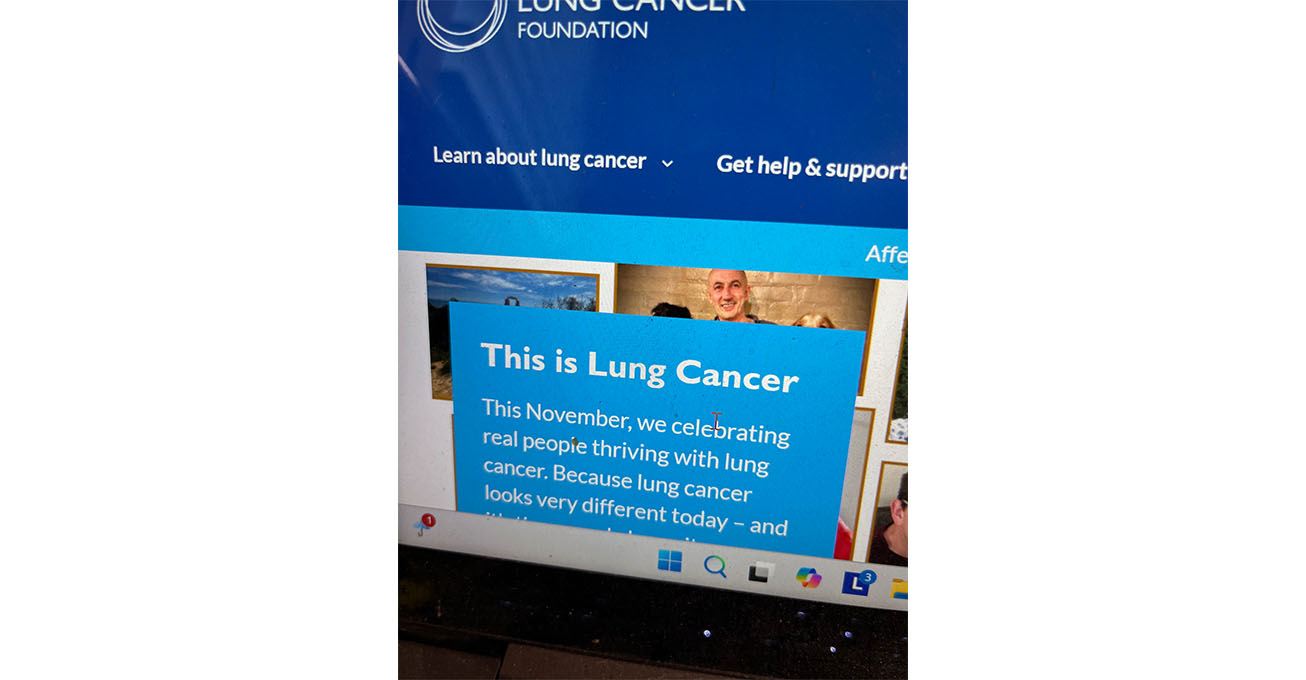
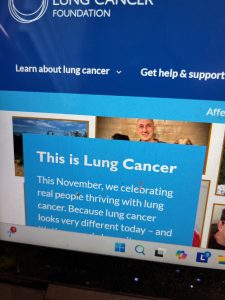
‘This is lung cancer’ 15 truths about lung cancer in 2025
- Got Lungs? Get Checked
The disease can affect anyone so if you have lungs and are concerned you should get checked.
- No One Deserves This
No one chooses cancer and no one should be blamed for it.
- Can You Name One?
One in four people in the UK don’t know a single lung cancer symptom.
- #1 Cancer Killer of Women
Lung cancer kills more women than breast and ovarian cancer combined and is the second most common cancer for both men and women.
- Spot It Early = Live Longer
People diagnosed at the earliest stage are nearly 20 times more likely to survive for five years than those whose cancer is caught late.
- Stigma Kills
Stigma delays or even stops diagnosis which leads to worse outcomes.
- Screening Saves Lives
Three-quarters of cancers found through screening are caught early.
- Diagnosis Isn’t the End
Many people live and live well after lung cancer.
- No Discrimination
Lung cancer does not discriminate by age – figures show 10% of lung cancers occur in people under 55 – or by gender or sexuality.
- Never Smoked
Around 28% of incidences are not caused by smoking. Other causes include workplace exposure (13%), air pollution (8%) and radiation (5%).
- No Cough? Still check
Not everyone with lung cancer will have a cough, know all the signs.
- Living Proof
People with lung cancer are still parents, friends, lovers, colleagues and members of our community, not just patients.
- Survivor Not Statistic
Stats tell trends. People tell stories — and they’re rewriting the odds.
- Act Now. Live Longer
75% of people diagnosed with lung cancer through screening are caught at an early stage.
- From Diagnosis to Finish Line
Some people don’t just survive lung cancer, they run marathons after a diagnosis with it.
Alex, who is 48 and lives in Wakefield, West Yorkshire with his partner and two children, was diagnosed with early-stage lung cancer in November 2022 and had surgery in January 2023. He ran the London Marathon for Roy Castle Lung Cancer Foundation last year.
Alex says: “When I found out I had lung cancer, my honest answer was ‘just give me whatever treatment gives me the best chance of seeing my kids grow up’.
“I’m one of those people who has always been sporty.
“Running became a huge thing for me during lockdown. I went from 5k to 10k to half marathon and then had the dream of running the marathon.
“If I hadn’t been pushing myself to that degree I definitely wouldn’t have found out I had lung cancer. It was just something I could tell when I was at full tilt.
“Everything goes blank, you go a bit numb, you just know your life’s changed from that second. I had half a lung removed essentially.
“Once my recovery had got to a certain point running became my saviour. The marathon was always then the plan.
“The Roy Castle Lung Cancer Foundation was absolutely brilliant, they’re full of lovely people. They did London Marathon places, and it was at that point that the stars all aligned.
“They did the really nice thing of setting up a WhatsApp group. We all had one uniting cause and that was that we were all going to run the London Marathon for the Roy Castle Lung Cancer Foundation. There were a couple of us in there who were survivors and we almost took on the role of unwitting heroes or beacons for the other guys. The group is still open now over a year after we finished so it was just really nice that we had that community all the way through.
“You realise that every day that you have now is very precious and life should be lived. I’m living hope because two and a half years ago I hoped just to still be here. Two and half years later and life is annoyingly normal. Not only am I seeing my kids grow up but I get to take a very active part in them doing so. I’ve just got to live life, stay healthy, stay happy, take what I’ve got, and I’ll run.”
Mel is 58 and lives in Hackney, London with her partner Sarah. She has three children and one granddaughter. Mel was diagnosed with early-stage lung cancer in August 2020 and had surgery and chemo. Unfortunately, the cancer returned, and she now has incurable stage four and is on a targeted therapy. She has just taken part in Sir Chris Hoy’s Tour De 4 awareness and fundraising event, where she cycled 37.5 miles, with a steady incline of 1,775 ft.
Mel says: “Once I got the diagnosis, I knew where I was, so we grabbed life.
“I had a grandad who smoked 40 cigarettes a day and he came down the stairs carrying an oxygen tank and he could barely breath. That was my image of what it was to have lung cancer.
“You are utterly out of control of your own life, but it was nowhere near as shocking to me as the initial diagnosis because being part of the community who I knew were living with stage four lung cancer makes the most extraordinary difference.
“Sarah was by my side emotionally and mentally; she has lived through it with me. I call her my cancer co-pilot because we’re in it together.
“I thought it might be overwhelming and frightening to listen to other people’s stories but eventually I felt ‘these are my people, this is my tribe, this is the cancer crew’ and I’m ready to accept that’s part of my identity.
“I’m in many ways fitter now than I was before. I’ve recently done a charity bike ride and I did it for Roy Castle and I’m so proud. It was the most extraordinary of days, the emotion, the connection, the laughter, the sense of achievement, all these people united by one terrifying thing. Sir Chris Hoy has raised the profile of what it means to live with stage four cancer. I live a good life, relatively symptom free. In time, as you move through your treatment, you can enjoy life again. It just takes time and community. It’s an ordeal but we’re all really capable of extraordinary things as humans, so much more than we think we are. We may have cancer but cancer doesn’t have us. I messaged a friend who also has stage four lung cancer and she said’ just make sure you lift your face up to the sun’. It just enabled me to really see the magic and the beauty in the world around us.”
Roy Castle Lung Cancer Foundation’s website provides information on signs and symptoms, how and where to book a screening, the treatment you can expect if you are diagnosed and advice on how to live with a diagnosis. The charity offers face to face support in the form of information days and support groups, as well as a telephone helpline. Follow this link to find out more: www.roycastle.org.
Chief Exec Paula Chadwick says: “We want to empower people to make that appointment, and we are here, face to face or over the phone, to help support them in doing that and beyond.”