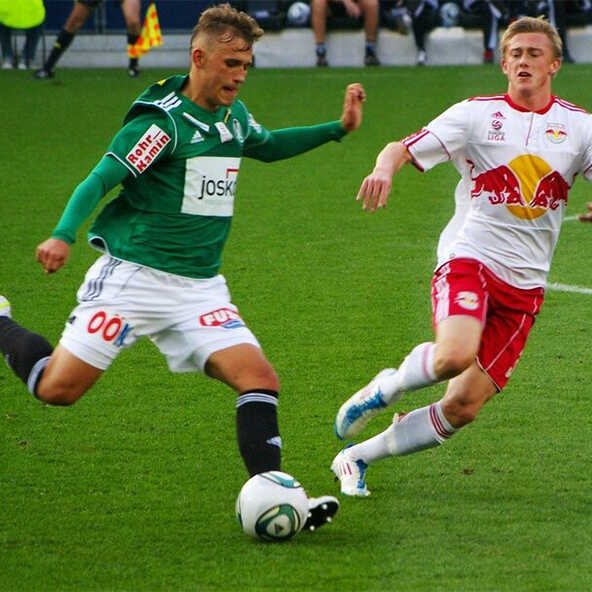
There’s no doubt that modern football is fairly different to what it was even thirty or forty years ago. This is certainly true from a business position as sponsorship has become an integral part of the financials, with clubs attempting to increase their profile and revenue streams at every opportunity.
One of these areas of sponsorship comes from firms looking to get their branding on the sleeves of a shirt, although questions have been raised over how useful that kind of sponsorship is.

In the Championship, for instance, sleeve sponsorship isn’t something that’s found on every team’s kit. However, when it comes to clubs that might be on their way up, any potential sponsors will be angling to take advantage of any shirt real estate not already spoken for. Norwich, for example, according to the EFL Championship odds, currently have a promising standing with odds of 1/25 to get promoted. Getting promoted to the Premier League has plenty of advantages for those clubs already in the Championship such as Norwich and those others vying for the promotion places in that it not only brings an unmatched level of television revenue but also higher solidarity payments and increased exposure for branding.
When it comes to England’s top division, shirt sponsorship has become a key part of every team’s shirt as a result of the previously discussed levels of exposure that top-flight football brings. To gain an idea of how much such deals can be worth to clubs, the deal for Expedia to sponsor Liverpool is worth a sum of £10 million a season, whilst Arsenal’s intriguing Visit Rwanda sponsorship was touted at costing £35 million in total. By contrast, the only real sponsorship to match this kind of money in the second tier is the actual league sponsorship for England’s lower division that is worth between £5 million and £6 million per year. This is actually less than what previous sponsors nPower paid and also around the amount that Coke paid for the same opportunity.

When it comes to League One and League Two, the exposure becomes much less than even the Championship, even with clubs like MK Don having a stadium with an optimistic capacity of over 30,000, despite the fact they never seem to have got a full capacity crowd at stadium:MK. Statista research has actually shown that it’s becoming harder to find sponsorship opportunities at the lower levels with 59% of partners stating such in League One and 43% in League Two. As a result, there is an argument to say that if those divisions’ clubs adopted sleeve sponsorship that it could result in more commercial opportunities for that end of English football, especially given that they are supposedly now harder to come by than ever before.
It can be said therefore that sleeve sponsorship is important for those in the top flight and has become a vital part of any club’s operation in that division. However, it is an under-appreciated measure in the lower leagues that comes at a time when those opportunities are becoming increasingly scarce and it would make sense for those kinds of deals to be struck on the lower end in order to raise the profile of those leagues and clubs.