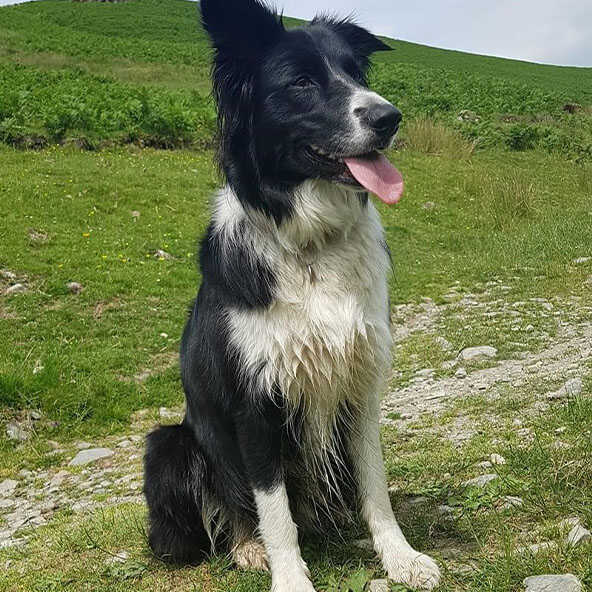

Dog owners are being urged to protect their pets and themselves from an infection called leptospirosis, after the case of a dog from Hebburn which contracted the condition despite being vaccinated against it.
Leptospirosis can make dogs seriously ill and the infection can be passed on to humans as Weil’s disease.
Dog owners can protect both their pets and themselves by keeping annual booster vaccinations up-to-date, as leptospirosis is one of the conditions these jabs prevent, and by being alert to the signs of the infection.
Michael and Jan Sproates, from Hebburn, South Tyneside, took their Border Collie Rosie to the vets when she suddenly became lethargic, lost her appetite and became incontinent.
She was referred to the team at Wear Referrals in Bradbury, County Durham, for further investigation, where blood tests showed an increase in liver enzymes and biopsies on her liver were unusual.
Further tests showed Rosie had leptospirosis which had triggered hepatitis and was causing inflammation in her liver. Following the diagnosis, Rosie began a course of medication which will help to control the condition so she can live a happy life.
Michael said: “Rosie went from being a perfectly healthy dog to losing 3kg and needing a lot of medication, which was quite a shock.
“The team at Wear Referrals were very thorough with their examinations and were on the ball with her treatment, which does seem to be working – she has got more of a healthy appetite back now and is happily running around again.”
Symptoms of leptospirosis which dog owners should look out for in their pets can include a fever, jaundice, muscle pain, limping, weakness and collapse. They may vomit, have less of an appetite and drink more.
Chiara Giannasi, head of internal medicine at Linnaeus-owned Wear Referrals, dealt with the case and confirmed how important it was to intervene as soon as possible in cases of leptospirosis.
She said: “Unfortunately, the condition can be difficult to treat so prevention is far better than cure. For the sake of a booster jab, it can be prevented – though as in Rosie’s case, unfortunately being vaccinated does not give complete prevention from the condition.
“The disease is carried by rats so areas where there are standing water, such as farmland, stables and ponds in the park, are all high-risk.
“There are a number of non-specific symptoms which affected animals may display, including lethargy, vomiting and diarrhoea. They may also show signs of jaundice, depression, being off their food, and drinking or urinating excessively.
“It’s important to highlight that as well as making animals very unwell, leptospirosis can pass to humans and make them seriously ill. Leptospirosis in humans is known as Weil’s disease, and so preventing it in our pets has a wider implication for human health, too.”
Wear specialises in providing expert multidisciplinary care, including anaesthesia, cardiology, diagnostic imaging, intensive care, internal medicine, neurology, OOH emergency and critical care, oncology, orthopaedics and soft tissue, as well as an in-patient and out-patient rehabilitation service.
For more information on Wear, visit www.wear-referrals.co.uk or search for Wear Referrals on social media.