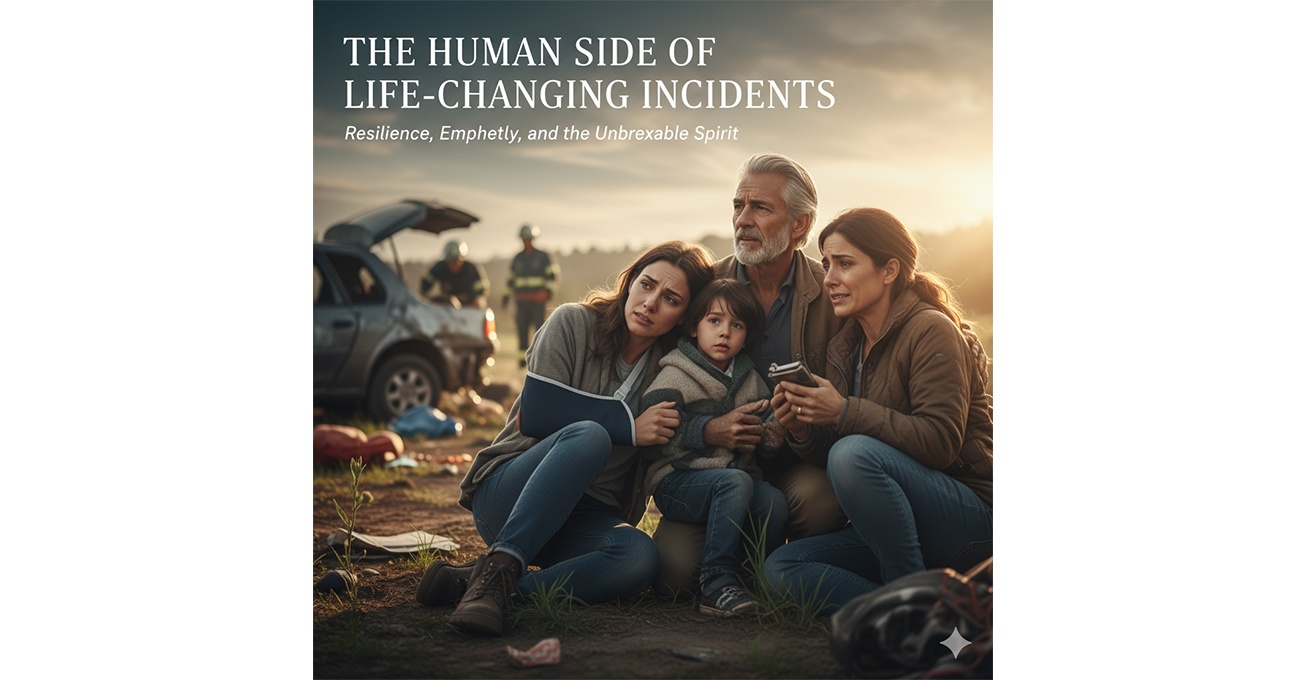
 Life can change in an instant. A serious road traffic accident, a workplace incident, or an unexpected act of violence can leave lasting consequences that reach far beyond the physical injuries sustained. While medical treatment can address broken bones and visible wounds, the emotional and psychological scars often run much deeper and take far longer to heal.
At the heart of these experiences are people whose lives have been altered in ways that are often invisible to the outside world. Exploring the human side of life-changing incidents is crucial to understanding why long-term support is so important.
Beyond the Immediate Impact
In the immediate aftermath of a traumatic incident, the focus is usually on physical survival and emergency treatment. Once the visible injuries are stabilised, many assume the hardest part is over. But for those affected, the real challenge often begins afterwards.
Flashbacks, anxiety, and difficulty sleeping are just some of the symptoms that can develop in the weeks and months following a traumatic event. For some, these experiences evolve into Post-Traumatic Stress Disorder (PTSD), a condition that can profoundly affect work, relationships, and daily life.
The Ripple Effect on Everyday Life
Life-changing incidents rarely affect only one area of a person’s life. The consequences ripple outwards, touching careers, families, and personal wellbeing.
- Work and Finances – Many survivors struggle to return to their jobs, either because of ongoing physical limitations or because psychological symptoms make it difficult to cope in stressful environments. Lost income and financial instability add further pressure.
- Relationships – Trauma can change the way people interact with those closest to them. Irritability, withdrawal, or heightened emotions may place strain on family and friendships.
- Health and Wellbeing – The mental health impact of trauma often manifests in physical ways too, such as fatigue, chronic pain, or stress-related conditions.
The cumulative effect is that survivors often feel isolated, misunderstood, or left behind, even when surrounded by others.
Recognising the Invisible Struggles
One of the most challenging aspects of trauma is that its effects are not always visible. Unlike a cast on a broken arm, the psychological impact of a traumatic event may go unnoticed by colleagues, friends, or even family members.
This invisibility can make it harder for survivors to seek help. They may fear being judged, disbelieved, or seen as weak. Raising awareness of these hidden struggles is key to ensuring that those affected feel able to access the support they need.
Seeking Support and Justice
Support comes in many forms: medical care, counselling, peer support groups, and understanding from employers and loved ones. But for some, particularly where PTSD has developed because of an incident caused by the negligence or wrongdoing of others, legal support can also play a vital role.
If you are living with PTSD as a result of someone else’s actions or failures, you may have the right to pursue PTSD Claims. These claims are designed to secure financial compensation to cover the wide-ranging impact of the condition, from the cost of medical treatment and therapy to loss of earnings and the long-term effect on your quality of life.
Importantly, a claim is not just about financial support – it is also about recognition. It acknowledges that what you are going through is real, serious, and the direct result of another party’s fault, whether that is an employer failing to provide a safe working environment, a driver causing a road accident, or another individual committing an act of violence.
Specialist solicitors with experience in PTSD cases are uniquely placed to handle these matters with the care and sensitivity they demand. They not only build a strong legal case but also guide survivors through the process with compassion, ensuring that justice is pursued in a way that respects the individual’s dignity and personal journey.
Rebuilding After Trauma
Recovery from a life-changing incident is rarely straightforward. It often involves setbacks, moments of frustration, and the long process of adjusting to a “new normal.” Yet with the right combination of medical treatment, emotional support, and legal assistance where needed, it is possible to rebuild a life filled with purpose and stability.
The human side of trauma is about more than diagnoses and statistics – it is about resilience, dignity, and the ability to find hope even after the most challenging of circumstances.
Life-changing incidents affect every part of a person’s world. While physical injuries may heal, the unseen emotional impact can be just as debilitating. Recognising these struggles and providing comprehensive support is essential.
For those whose trauma was caused by negligence or wrongdoing, pursuing PTSD Claims with the help of specialist solicitors can provide both practical assistance and a sense of justice. With the right support network in place, survivors can begin to move forward, proving that even in the face of life-changing incidents, recovery and hope remain possible.