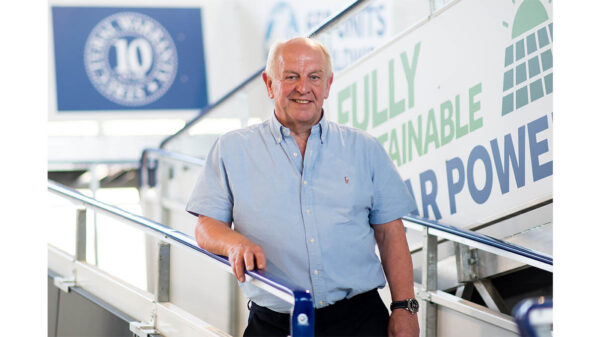
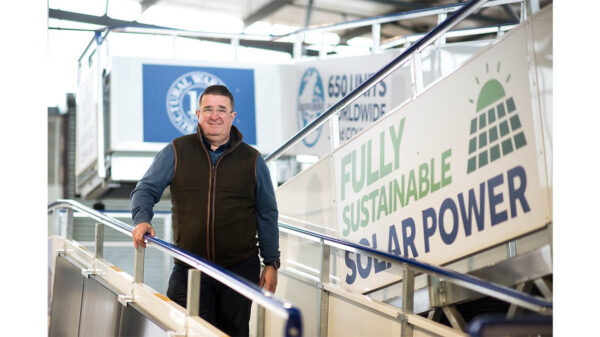
An interview with WeFlex CEO, Nicko Williamson..
The ride-hailing market continues to expand – how important is it for the environment that the consequent uptake in demand is supplied by low-emission vehicles?
It’s really important that demand is supplied by cleaner vehicles. Ride-hailing vehicles do 30,000+ miles per year on average, so they are a big contributor of carbon emissions and significantly impact air quality.
This is especially the case in big cities. Take London for example, which has 88,000 licensed private hire vehicles registered to drive on its roads. A large-scale shift to electric technology among this cohort would make a serious difference to the city’s environment.
Transport for London’s move to ban new private-hire vehicles that are not zero emissions capable puts you in a strong position to supply the demand for a new generation of green vehicles – how hopeful are you that other cities in the UK will follow suit?
London is leading on Clean Air Zone adoption and are placing some ambitious demands on private-hire vehicles. We believe that WeFlex – partly owing to this GBP 10 million investment by Triple Point, which is fueling our growth and development – is in a strong position to help drivers make the shift.
But we are looking to further increase operations across the UK, too. Other cities, such as Birmingham for example, are starting to get tougher on pollution and making it challenging to operate more polluting vehicles. We are in a position to help: we plan to double our fleet to 1,400 vehicles over the next year, becoming the largest provider of cars to the Ride-Hailing market, and serving drivers all over the country.
What challenges will your increased activity in the Midlands and other major UK cities pose that you haven’t already dealt with in London?
The main challenges relate to infrastructure: we need to ensure our customers can access a sufficient numbers of charge points to make running an electric vehicle viable and practical. This is still a challenge even in London, but across the UK as a whole there needs to be significant investment in charging infrastructure.
Another challenge is all the different councils and local authorities we need to work with in order to license vehicles. Part of WeFlex’s value proposition is that we license vehicles for our customers, so we have had to quickly learn how to do this with all the various councils. Many of the councils have different requirements and processes, whereas in London we just deal with TfL. We still have work to do to make the registration process as streamlined as possible nationwide.
Part of the GBP10 million facility will go towards financing orders for the UK-produced Nissan Leaf. As a lessee of vehicles you have a significant impact on the automotive sector – how important is the continued support of the UK manufacturing industry for you?
We are proud to be supporting British manufacturing, including creating valuable jobs, after an uncertain few years for the UK car industry. Nissan will make 2,000 of its Sunderland-made electric Leaf’s available via WeFlex to Uber drivers, which will hopefully help support regeneration in the UK car manufacturing industry. At the same time, we currently buy hundreds of Toyota Corolla hybrids, which are also British-made.
The recent facility for WeFlex is just another sign of the financial viability of green business. Will it soon become a pre requisite to have the environment at the forefront of strategy when conducting business?
In the transport sector especially, showing that your business fits in with and supports a greener future is essential if you want a moral license to operate. Businesses need to show that they are thinking long-term and not just about profits.
This has become easier. It’s now much more possible to combine strong environmental considerations with profitability. Now there are more viable options available to purchase low-emissions vehicles which make them a more viable option for drivers.
From an investor point of view, too, things are changing. We know from working with Triple Point that they have a defined strategy for investing in companies that make a difference beyond simply delivering returns. Financial companies are under pressure to show their own investors that they care about where they put their money, so it’s a knock-on effect.
With this injection of funding you plan to double your fleet to 1,400 cars. Will this enable you to kick on and cement your position as the go to choice for drivers?
Yes, our aim is to be the number one player in the provision of vehicles to the ride-hailing market in the UK. This funding from Triple Point gives us the firepower to substantially increase our fleet and help achieve that goal.
Triple Point has worked with WeFlex for five years now. How important was it to take the facility from a partner that understands and supports the makeup of your business?
We have a great relationship with Triple Point. They have supported us since I started the business. We trust the team there, we enjoy working with them, and they have been flexible and helpful. This has meant they were able to work with us to provide a funding facility that’s suitable to grow our business further.
Your flexible leases have enhanced your reputation among drivers – has it been difficult to juggle best serving their needs with the needs of investors?
We have been clear from the outset with all stakeholders that we provide flexible contracts, and this does not have to mean any conflict between customers and investors. This means customers have unrivaled flexibility, which is attractive for them. Our investors understand our products and also that we are able to manage this flexibility effectively. For instance, when a customer terminates their agreement with us, most often the car comes back to us and before going to another ride-hailing driver.
As the ride hailing industry expands, how crucial a role does your strong relationship with drivers play in working with these new ride hailing companies?
Our relationship with ride-hailing drivers is absolutely crucial – they are our customers. We work hard to deliver excellent customer service to them, and as a result we have a good reputation and brand among drivers.
Ride-hailing companies like to work with us because we treat our customers well and provide good value to them. Plus, we have the scale and infrastructure to be able to provide large volumes of vehicles.
What is your outlook more broadly for the future of the ride hailing industry?
There has been a pretty sharp increase in competition in the ride-hailing industry in the UK over the past couple of years. Rival apps such as Kapten, Ola, Bolt and Wheely are challenging Uber in a battle for market share. But running an effective platform is all about efficiency: liquidity in terms of customers and drivers. It makes sense to be a big player, so for that reason we believe that there will likely be further consolidation. From the drivers perspective it’s good to have competition. Competition is healthy!